
HubSpot vs ActiveCampaign: The Honest Comparison You Actually Need
If you've spent any time researching CRM and marketing automation tools, you've almost certainly landed on both HubSpot and ActiveCampaign. They sit at the top of most shortlists, and for good reason — but they're built for fundamentally different kinds of businesses. Picking the wrong one isn't just annoying, it's expensive. This comparison cuts through the marketing copy to tell you what each tool actually does well, where each one falls short, and which one deserves your budget.
What Each Tool Is Actually Designed For
The single most important thing to understand before comparing features or pricing: these are not interchangeable products. ActiveCampaign is a Chicago-based marketing automation platform built first and foremost for email marketers. It grew into CRM territory, but email automation is the core. HubSpot, on the other hand, is a full-suite platform offering separate "Hubs" for sales, marketing, and customer service teams — a product designed for organizations that want everything under one roof.
That distinction shapes every trade-off in this comparison. If your primary pain point is sophisticated email sequences, behavioral triggers, and contact segmentation, ActiveCampaign is in its element. If you need a platform where your sales reps, marketers, and support agents all work from the same system with shared data and reporting, HubSpot's multi-hub architecture is purpose-built for that.
Neither tool is a niche underdog — both appear regularly on best-of lists for Freshsales-style CRM comparisons, and both integrate deeply with platforms like Zapier for extending their functionality into broader automation stacks.
Ease of Use and Interface
HubSpot
HubSpot's interface is clean, well-organized, and genuinely beginner-friendly. The dashboard is customizable — you can surface the metrics and pipeline views that matter most to your role without digging through nested menus. There's a built-in onboarding tour that walks new users through the core workflows, which matters when you're rolling out a tool to a team with mixed technical abilities. Live chat support is available without needing to upgrade to an enterprise plan.
That said, HubSpot's accessibility has a catch: the free tier and lower paid tiers gate off enough features that you may find yourself constantly looking at locked functionality. The platform feels expansive precisely because you can see what's possible — you just can't always use it at your current price point.
ActiveCampaign
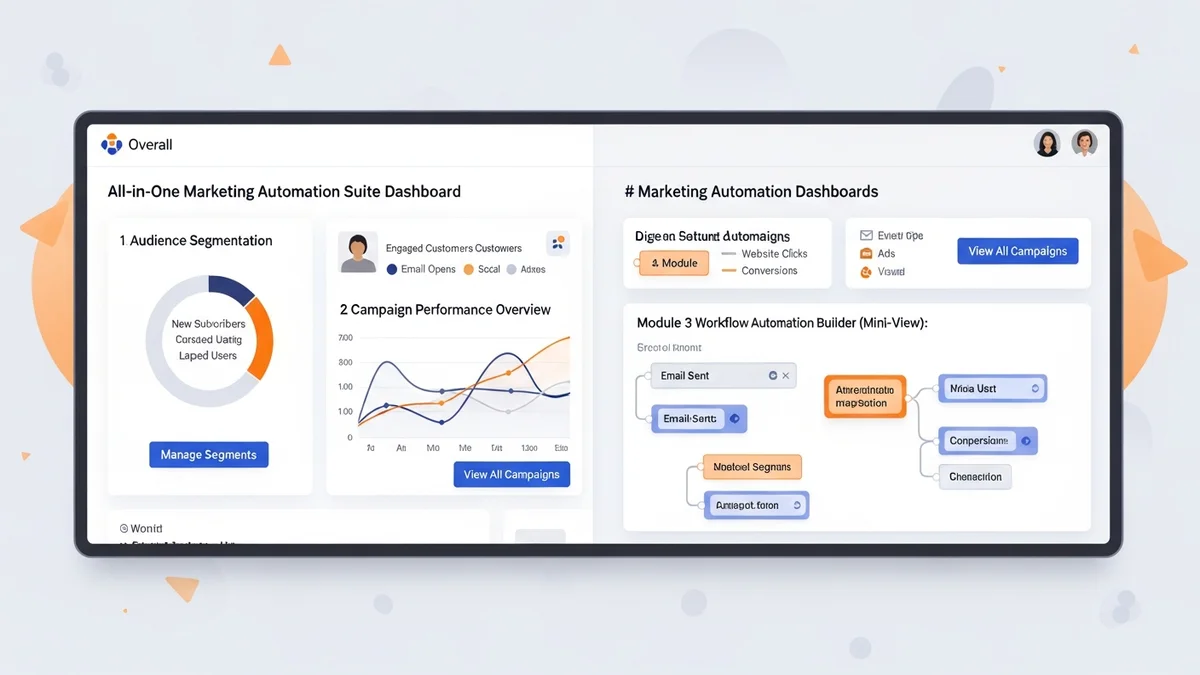
ActiveCampaign has a steeper learning curve, particularly around its automation builder. The depth of options — conditional logic, split paths, goal tracking, and event-based triggers — is genuinely impressive, but new users often need a few hours to get comfortable with the visual workflow builder. The upside is that once you're fluent, the automation tool is faster to work in than HubSpot's equivalent. Zapier's reviewers noted that "ActiveCampaign's automations are easier to use" once you've cleared the initial learning hump, despite ActiveCampaign having fewer third-party app integrations overall.
Features Head-to-Head
| Feature | ActiveCampaign | HubSpot |
|---|---|---|
| Email Marketing | Best-in-class — named best email marketing service by EmailTooltester | Solid but not the primary strength |
| Automation Builder | Easier to use once learned; deep conditional logic | More app integrations; slightly less intuitive builder |
| CRM / Pipeline Management | Unlimited pipelines at all tiers | Pipeline count capped by tier |
| Reporting & Dashboards | Good; includes Marketing Revenue reporting | Excellent; most customizable in its class |
| CMS | Basic | More powerful; designed for content-driven teams |
| Support & Onboarding | Included in all paid plans | Often sold as a paid add-on |
| Free Plan | No — 15-day free trial only | Yes — generous free CRM plan available |
| Third-Party Integrations | Broad but fewer than HubSpot | Largest ecosystem in the category |
Newsletter
Get the latest SaaS reviews in your inbox
By subscribing, you agree to receive email updates. Unsubscribe any time. Privacy policy.
Email Marketing: ActiveCampaign Wins Clearly
If email is central to your growth, ActiveCampaign is the better tool. EmailTooltester, which tests these platforms rigorously, named ActiveCampaign the best email marketing service specifically because of its automation depth and reporting thoroughness. The behavioral trigger options — sending emails based on site visits, link clicks, purchase history, or custom events — go deeper than what HubSpot offers at comparable price points. ActiveCampaign also has no hidden fees tied to contact volume scaling in the same way HubSpot does.
Reporting: HubSpot Wins
For analytics-heavy teams, HubSpot's reporting suite is the best in the business. Custom report builders, cross-hub data correlation, and dashboard widgets that pull from sales, marketing, and service data simultaneously give operations and revenue teams visibility that ActiveCampaign simply can't match. ActiveCampaign's reporting is good — the Marketing Revenue attribution feature in particular is useful — but it doesn't approach HubSpot's depth or customizability.
Pipeline Management: ActiveCampaign Has the Edge
ActiveCampaign gives you unlimited pipelines regardless of which plan you're on. HubSpot gates pipeline count by tier, which becomes a real limitation as sales teams grow and want to manage multiple product lines or deal stages separately. Both tools handle basic pipeline operations well, but ActiveCampaign's flexibility here is a meaningful advantage for growing SMBs that haven't yet committed to an enterprise HubSpot contract.
Integrations: HubSpot Wins
HubSpot's app marketplace is enormous. If you're building a tech stack that needs to connect with dozens of tools, HubSpot almost certainly has a native integration. ActiveCampaign integrates well with core tools and works cleanly with automation middleware like Make or n8n, but HubSpot's native ecosystem is simply broader. That said, for teams already using lightweight automation connectors, the gap is less critical — most ActiveCampaign gaps can be bridged with a good workflow automation layer.
Pricing Comparison
Pricing is where these two tools diverge most sharply — and where the most confusion lives.
| Plan | ActiveCampaign | HubSpot |
|---|---|---|
| Free Tier | None (15-day trial) | Free CRM plan available |
| Entry-Level Paid | $19/month (1,000 contacts) | Starter plans begin around $15–20/month per Hub, but meaningful features require bundles |
| Commitment | Monthly or annual | Discounted bundles require 12-month commitment |
| Hidden Costs | Minimal — pricing scales predictably with contacts | Support, onboarding, and some features sold separately |
| Support Included | Yes, in all paid plans | Often an additional cost |
HubSpot's free CRM is genuinely useful and a smart way to get a team started without any spend. But the moment you need marketing automation, advanced reporting, or multi-hub access, you're looking at bundle pricing that requires a 12-month commitment. That's a significant ask for a small business still validating its processes.
ActiveCampaign starts at $19/month for 1,000 contacts and scales predictably. There are no surprises in the form of paid support packages or locked onboarding services — those come with the plan. For small and mid-sized businesses watching cash flow, that predictability has real value. HubSpot's higher-tier plans are not cheap for small businesses, which is precisely why HubSpot alternatives like ActiveCampaign get so much attention.
Which Tool Is Right for You?
Choose ActiveCampaign if:
- Email marketing and behavioral automation are your primary use cases
- You're a small-to-mid-sized business that wants predictable, transparent pricing
- You need unlimited sales pipelines without paying for enterprise tiers
- You want onboarding and support included without negotiating add-ons
- You're comfortable investing a few hours to learn the automation builder
Choose HubSpot if:
- You have sales, marketing, and support teams that need a shared platform
- Reporting and cross-functional dashboards are critical to your operations
- You want the largest native integration ecosystem available
- You have a team that needs a gentle learning curve from day one
- You can commit to annual pricing to make the bundle economics work
The Bottom Line
There's no objective winner here — only a winner for your specific situation. ActiveCampaign earns its reputation as the best email marketing automation tool in its price range. It's focused, powerful where it counts, and priced in a way that doesn't punish you for growing. HubSpot is the better choice if you're building a multi-team revenue operation and want everything — CRM, marketing, content, and service — to share a single source of truth.
What both tools share is a need for a broader automation strategy. Whichever platform you choose, you'll likely want to extend it with tools like Zapier for connecting third-party apps, or consider alternatives like Copper CRM if your team lives in Google Workspace and wants a lighter CRM footprint altogether. The platform decision is just one piece of the stack.
If you're still on the fence, start with HubSpot's free CRM to get a feel for the interface, then spin up ActiveCampaign's 15-day trial to see what real email automation looks like. The difference becomes obvious quickly once you're inside both tools.