
Klaviyo vs Mailchimp: The Honest Comparison for 2026
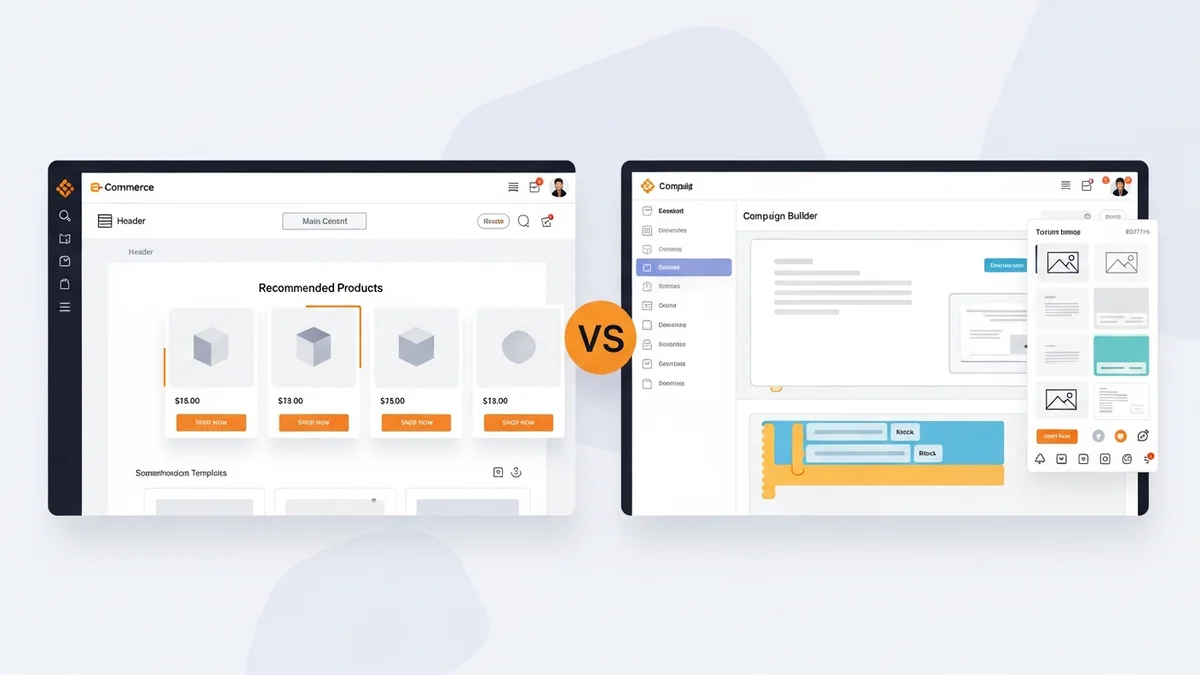
Most Klaviyo vs Mailchimp comparisons bury the lead. The real question isn't which platform has more features — it's which one is built around the same assumptions your business is. Klaviyo treats customer data as the product; Mailchimp treats the campaign as the product. Everything else flows from that difference.
This comparison is built from current pricing data, real platform testing, and an honest look at where each tool breaks down. We'll tell you which one wins for ecommerce, which one makes sense for a lean generalist stack, and where the pricing surprises come from.
Quick Comparison: Klaviyo vs Mailchimp at a Glance
| Category | Klaviyo | Mailchimp |
|---|---|---|
| Founded | 2012 | 2001 |
| Headquarters | Boston, MA | Atlanta, GA |
| Best for | B2C ecommerce marketing teams | Small and midsize businesses |
| Core strength | Real-time customer profiles & segmentation | Drag-and-drop campaign builder |
| Free plan contacts | 250 | 500 |
| Free plan monthly sends | 500 | 1,000 |
| Entry paid plan | $20/month (500 contacts) | Tiered by contact count |
| Automation on free plan | Yes | No — requires Standard plan or higher |
| Shopify integration | Native, real-time data sync | Available, less granular |
| Learning curve | Moderate to steep | Gentle — built for beginners |
Company Background: Why the Origin Story Matters
Klaviyo was founded in 2012 in Boston with an explicit mission to "solve the customer data problem." It started as a customer database and evolved into what the company now calls a B2C CRM — a platform where real-time behavioral data drives every campaign decision. That history shaped a product built around data modeling first, messaging second.
Mailchimp has a very different story. It launched in 2001 as a side project at a web design agency, built specifically to replace the clunky, expensive email software of that era. The goal was accessibility — anyone should be able to send a professional newsletter without enterprise software complexity. Intuit acquired Mailchimp in 2021, giving it broader distribution but also orienting it more firmly toward small business generalism.
These origins matter because they explain something you'll feel immediately when using each platform: Klaviyo assumes you care deeply about what your customers do; Mailchimp assumes you want to get a campaign out the door quickly. Neither assumption is wrong — they're just aimed at different operators.
Features and Functionality: Where Each Platform Wins
Klaviyo: Data-Driven Automation Built for Ecommerce
Klaviyo powers roughly 176,000 brands worldwide, and the platform earns that scale through depth, not breadth. The core differentiator is segmentation without limits — you can group customers by any combination of behaviors (purchases, browse activity, cart additions, predicted lifetime value) and those lists update in real time. This isn't a feature you'll use on day one, but it's the feature that separates a $50k/month store from a $500k/month store when it comes to email revenue.
The automation builder supports cross-channel flows and behavior-triggered sequences. Abandoned browse campaigns, post-purchase win-back flows, and predictive churn sequences are built directly into the core platform rather than bolted on as add-ons. The newer AI agents can predict future purchase probability and flag customers likely to churn before they actually stop buying — that's a meaningful edge for retention-focused ecommerce teams.
For Shopify specifically, Klaviyo's native integration syncs customer data in real time. Every page view, product click, and cart event flows into customer profiles automatically. Dynamic product blocks in emails use AI to surface items each customer is statistically likely to buy based on their click history. This kind of personalization requires zero manual setup once the integration is live.
Newsletter
Get the latest SaaS reviews in your inbox
By subscribing, you agree to receive email updates. Unsubscribe any time. Privacy policy.
If you're building complex automations that need to connect Klaviyo to other business tools, pairing it with a workflow automation platform like Make or N8N can extend its reach considerably — especially for syncing customer events with CRMs or external data warehouses.
Mailchimp: Accessible Campaigns Without the Data Overhead
Mailchimp's strongest argument is operational simplicity. The dashboard is clean, the campaign builder uses a large "Create" button as a literal starting point, and the Creative Assistant pulls your brand colors and assets directly from your website URL. You don't need to configure a brand kit — the platform infers it for you.
With over 250 templates covering all business types (not just ecommerce), Mailchimp is the faster path to a polished, on-brand newsletter. For a nonprofit, a consulting firm, or a local service business, that breadth is genuinely useful. Klaviyo's templates are more product-focused; they work well for store emails but feel mismatched for non-ecommerce content.
One important caveat: Mailchimp's free plan no longer includes automation. You need a Standard plan or higher to unlock behavioral targeting and automated flows. This is a real limitation for bootstrapped businesses who assumed the free tier would support a basic welcome sequence. It doesn't anymore.
For teams that want Mailchimp to connect more deeply into their business stack — syncing leads from forms, pushing subscriber data to a CRM like Freshsales, or triggering campaigns based on external events — Zapier remains the most common integration layer.
Pricing: The Real Numbers
Klaviyo's pricing model has a quirk that catches people off guard: it counts every customer profile, not just subscribed email contacts. If a customer browsed your store and Klaviyo captured their event data, they count against your contact limit even if they never opted into email. For a Shopify store with significant organic traffic, your billable profile count can be significantly higher than your email subscriber list.
Klaviyo Pricing (Email Plans)
| Contact Tier | Monthly Cost | Monthly Email Sends |
|---|---|---|
| Free (up to 250 contacts) | $0 | 500 |
| 500 contacts | $20/month | 5,000 |
| 1,000 contacts | $30/month | Included |
| 10,000 contacts | $150/month | Included |
| 50,000 contacts | $850+/month | Included |
Mailchimp's pricing is tiered by plan level (Essentials, Standard, Premium) as well as contact count. Automation features require Standard tier or higher, which means the effective entry price for a comparable feature set is higher than Mailchimp's lowest advertised tier.
As a general benchmark from industry data: Klaviyo makes more financial sense once monthly revenue exceeds $50,000. Below $20,000/month in monthly revenue, Mailchimp's simpler pricing and lower entry cost typically wins on pure unit economics. In the $20,000–$50,000 range, the right answer depends heavily on how much of your growth strategy depends on segmentation depth and automated lifecycle flows.
Ecommerce and Shopify: A Clear Winner Emerges
For Shopify stores specifically, this comparison isn't particularly close. Klaviyo was designed from the ground up for ecommerce; Mailchimp added ecommerce capabilities later. That sequencing shows in the feature set.
Klaviyo's Shopify integration captures browse behavior, cart events, purchase history, and predicted lifetime value — all feeding into real-time customer profiles. Abandoned browse campaigns (not just abandoned cart, but abandoned product page views) are native features. Mailchimp's Shopify integration covers the essentials but lacks the behavioral granularity that powers Klaviyo's most effective automation sequences.
If you're running a Shopify store above the $50,000/month threshold and email is a primary revenue channel, Klaviyo's deeper data model is likely worth the higher cost. The revenue attribution tracking alone — which ties each email send to actual purchase events — makes it easier to justify spend and optimize campaign timing.
For teams managing Shopify alongside other sales channels, connecting ecommerce data to CRM tools via platforms like Pipedream or Activepieces can help unify customer data across the full funnel, regardless of which email platform you choose.
Ease of Use and Learning Curve
Mailchimp wins this category cleanly. The interface is designed for people who are not professional marketers, and that shows in every detail — the guided setup flow, the automatic brand extraction from your website URL, the 250+ templates organized by use case. You can send a competent campaign within an hour of signing up.
Klaviyo has a real learning curve. The AI-powered setup guides help new users get started faster than they used to, but the platform's depth is also its friction. Advanced segmentation logic, multi-step flow configuration, and the profile data model all require investment to use effectively. The payoff is significant — but it's a payoff, not an immediate return.
This difference matters most for team size and expertise. A solo operator or small team without a dedicated email marketer will find Mailchimp sustainable to run. A dedicated ecommerce email team will eventually outgrow Mailchimp's ceiling and find Klaviyo's learning curve a worthwhile trade for the capability uplift.
Which Platform Should You Choose?
The decision framework is actually straightforward once you accept that these platforms aren't competing for the same user:
Choose Klaviyo if: You run an ecommerce store (especially on Shopify), your monthly revenue exceeds $50,000, and email is a primary growth lever. You want real-time behavioral segmentation, predictive analytics, and revenue attribution built into your email platform — not bolted on through third-party integrations.
Choose Mailchimp if: You're a small or midsize business outside ecommerce, you prioritize ease of use over segmentation depth, or you need a marketing platform that handles email, social, landing pages, and basic advertising from one dashboard without requiring a dedicated marketing operator to run it.
Both platforms integrate with the broader automation ecosystem, and neither locks you out of connecting to CRMs, ad platforms, or workflow tools. But they serve fundamentally different operating models. Klaviyo rewards businesses that have the data maturity and team capacity to use it. Mailchimp rewards businesses that need to move fast without building a dedicated customer data infrastructure.
If you're evaluating the full stack — not just email but the automation layer connecting your tools — it's worth reviewing how platforms like Make and Zapier slot alongside either choice. Your email platform is one node in a broader marketing system, and getting the integration layer right matters as much as the platform itself.