AI Business Automation in February 2026: What the Data Actually Tells Us
February 2026 has been a clarifying month for anyone paying attention to AI in business. The hype cycle is over. What's replacing it is harder to summarize in a headline, but more interesting: enterprises are now deciding which AI bets to double down on, which pilots to kill, and how to build automation infrastructure that compounds over time rather than just impressing a board slide.
This post pulls together the sharpest signals from this month's research — PwC's 2026 AI predictions, Zinnov's enterprise automation data, and the live news cycle from AI Business — and translates them into what actually matters if you're running or scaling a business automation stack right now.
Agentic AI Is Becoming the New Middleware — And That Changes Everything
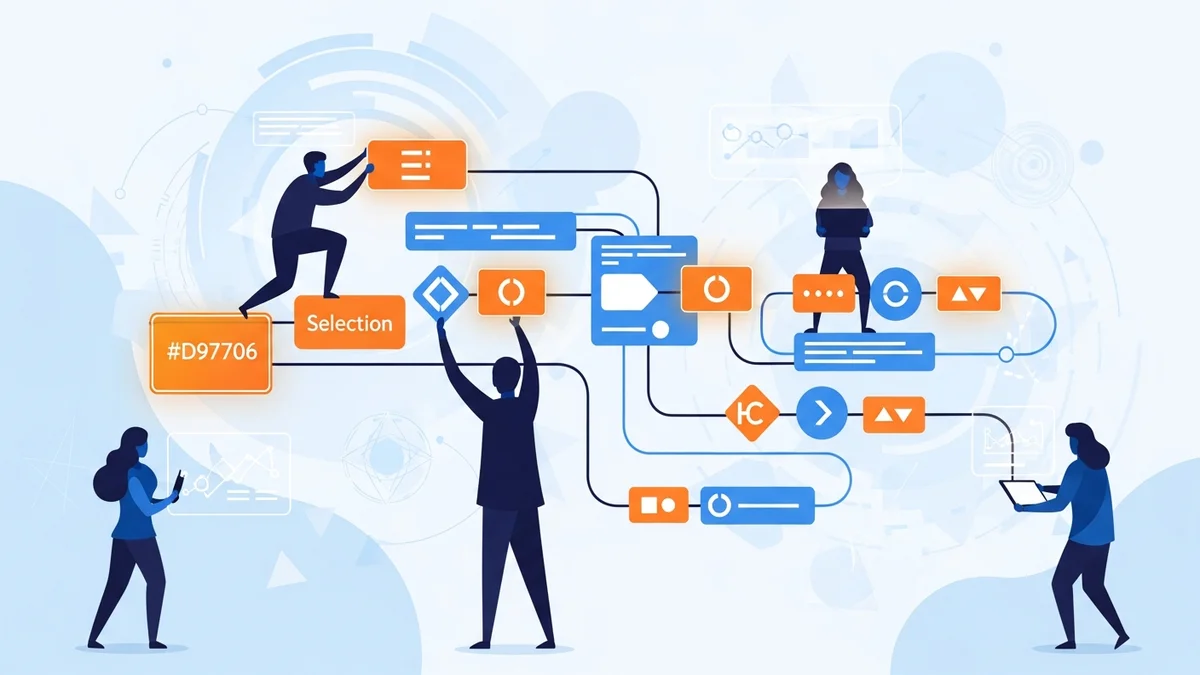
The single most important structural shift happening in enterprise AI right now is the rise of agentic systems. Zinnov defines agentic AI not as smarter chatbots but as goal-driven execution engines — systems that can coordinate multiple agents, plan across steps, and optimize outcomes without requiring human approval at every junction. The analogy they use is middleware, and it's apt: agentic AI is becoming the connective tissue between people, platforms, and processes.
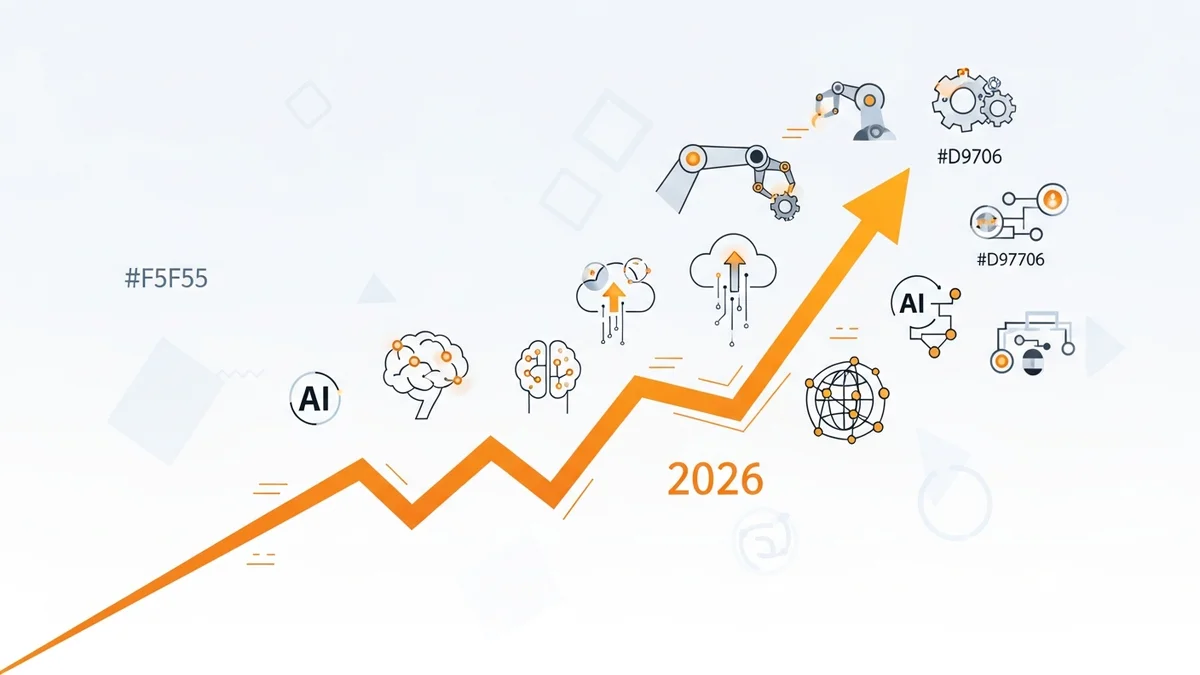
The market data backs this up. According to Zinnov's Agentic AI Report, the agentic AI platform market stood at roughly $12–15 billion in 2025. By 2030, it's projected to reach $80–100 billion — a CAGR of 40–50%. That growth rate is not speculative froth; it reflects enterprises actually committing budget to replace brittle, rule-based automation with systems that can reason and adapt.
What does this mean practically? If you're currently running workflow automation through tools like Zapier or Make, the question you should be asking is not "how do I add more zaps" but "where in my stack does a reasoning layer create compounding value?" Agentic AI doesn't replace trigger-action automation — it sits above it, deciding which automations to invoke, when, and why.
Why This Moment Is Different From 2024's Agent Hype
In 2024, every AI vendor claimed to have "agents." Most were glorified prompt chains. The shift in early 2026 is that enterprises have now run enough real pilots to separate signal from noise. Governance frameworks have caught up enough that legal and compliance teams will actually sign off on autonomous execution. And the tooling — particularly around observability and error recovery — has matured to where you can trust an agent to handle a multi-step workflow without babysitting it.
ElevenLabs made a telling move in February 2026: they began offering insurance products for AI agents targeting enterprise customers. That's not a marketing gimmick — it's a sign that the risk calculus around autonomous AI execution has become mainstream enough that it's an insurable product category. Enterprises are deploying agents at scale, and the ecosystem is responding accordingly.
The February 2026 Funding Landscape Sets the Stage
Anthropic's $30 billion raise in February 2026 — valuing the company at $380 billion — is worth unpacking beyond the headline number. This is not venture capital placing a speculative bet. At this scale, this is institutional capital concluding that the underlying AI infrastructure layer will be essential to how businesses operate for the next decade.
For automation tool buyers, this matters in two ways. First, the foundation models underpinning AI-assisted automation tools are getting significantly more capable, and that capability improvement is funded. Second, the concentration of capital at the frontier model layer means the competitive action is increasingly at the application and integration layer — which is exactly where tools like Workato and n8n compete.
Newsletter
Get the latest SaaS reviews in your inbox
By subscribing, you agree to receive email updates. Unsubscribe any time. Privacy policy.
OpenAI's February enterprise platform announcement points in the same direction: the model vendors are pushing hard into enterprise workflows, which raises the strategic question of whether you want your automation infrastructure locked into a single AI vendor's ecosystem or built on composable, model-agnostic tooling.
What Automation Tools Actually Deliver Against These Trends
The research paints a clear picture of where AI automation is heading. The practical question is how current workflow automation tools position against that trajectory. Here's an honest assessment:
| Tool | Agentic AI Readiness | Best Fit | Agentic Limitation |
|---|---|---|---|
| Zapier | Moderate — AI Steps feature added 2024 | SMB trigger-action automation | No native multi-agent orchestration |
| Make | Moderate — visual scenario builder with AI modules | Complex multi-step workflows | Logic is still human-defined, not goal-driven |
| Workato | High — enterprise-grade with AI copilot and recipe IQ | Enterprise automation with compliance requirements | Cost scales steeply with recipe volume |
| n8n | High — self-hosted option, AI agent nodes available | Technical teams wanting full control | Requires engineering resources to operate |
| Microsoft Power Automate | High — deep Copilot integration across M365 stack | Organizations already in the Microsoft ecosystem | Limited portability outside Microsoft |
| Activepieces | Growing — open-source with AI blocks | Cost-sensitive teams wanting extensibility | Ecosystem smaller than Zapier/Make |
The honest take: if agentic AI is becoming infrastructure (and the $80–100B market projection by 2030 suggests it is), then automation tools that stay at the trigger-action layer will face margin pressure from both above (foundation model vendors building orchestration) and below (open-source tools getting good enough). The tools that will win are those that make it easy to compose agents into workflows, not just connect APIs.
Four Automation Priorities Worth Acting On Right Now
Zinnov identifies four macro AI trends reshaping 2026. Here's how to translate each into actionable automation decisions:
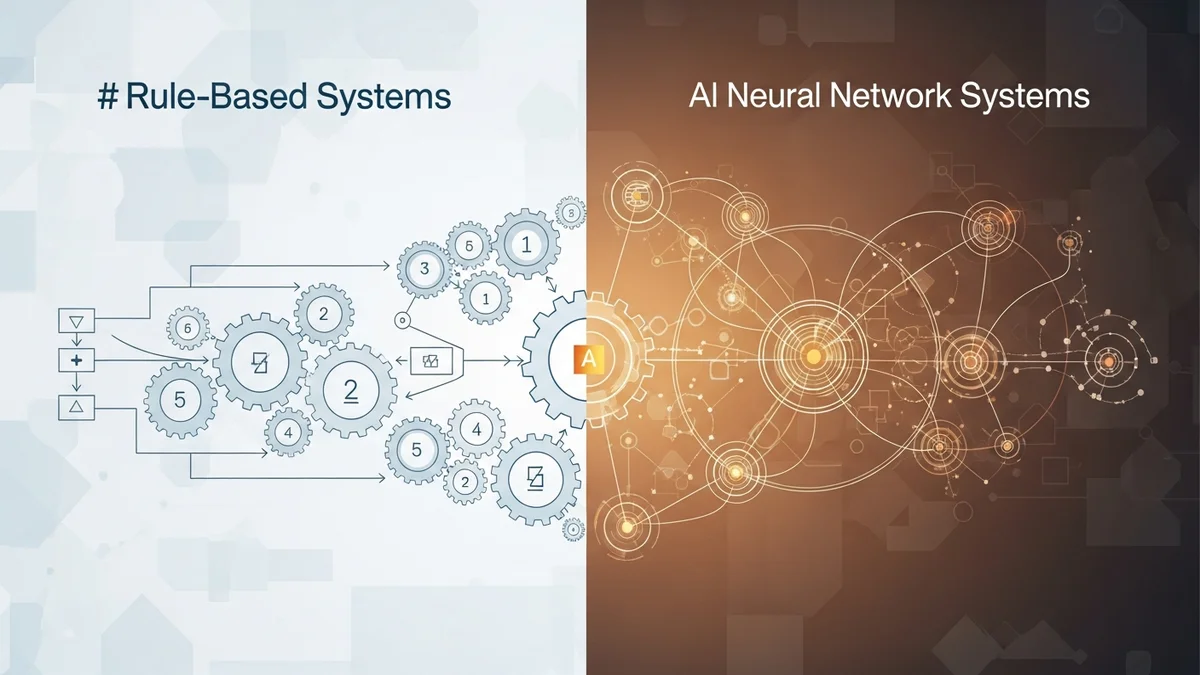
1. Shift From Rule-Based to Goal-Based Automation
Traditional workflow automation is declarative: if X happens, do Y. Agentic automation is imperative: achieve Z, figure out the steps. If you're building new automation workflows in 2026, start with the goal rather than the trigger. Tools like n8n with its AI agent nodes, or Workato with Recipe IQ, let you define desired outcomes and let the system work backward to execution. This is a meaningfully different design paradigm and worth the learning curve.
2. Build Observability Before You Scale
One of the most consistent findings from enterprise AI pilots is that visibility into what AI agents are actually doing becomes critical at scale. If you're running automation through Pipedream or Make, invest time now in logging, alerting, and audit trails before you hit the complexity wall. Autonomous systems that fail silently are worse than no automation at all.
3. Consolidate Your CRM Automation Layer
Sales and CRM automation is where the ROI case for AI is most legible in 2026. AI-assisted lead scoring, automated follow-up sequencing, and conversation intelligence are all mature enough to deploy with confidence. If you're using a CRM like Freshsales or Close, the automation features baked into those platforms are now substantive enough that you should evaluate whether a separate workflow automation tool is still earning its seat. Consolidation often beats complexity.
4. Plan for Model Switching
With Anthropic at $380B and OpenAI pushing deeper into enterprise, the model landscape is not settling — it's accelerating. Any automation infrastructure you build with hard-coded dependencies on a single foundation model is technical debt you'll have to pay later. Prefer abstraction layers where possible. Tools built on open standards and model-agnostic APIs will age better than those tightly coupled to a single vendor's model version.
The Governance Gap Is Real and Getting Expensive
PwC's 2026 AI predictions consistently highlight governance and trust as the bottleneck slowing enterprise AI deployment — not capability, not cost. The question companies can't avoid in 2026 is: how do you let an AI agent run a workflow autonomously while maintaining auditability, reversibility, and compliance?
ElevenLabs offering agent insurance is a market signal that risk management for autonomous AI is a real commercial problem, not a theoretical one. Organizations deploying agents in customer-facing workflows — support automation, sales outreach, contract review — need to think about failure modes, escalation paths, and liability as much as they think about accuracy and speed.
This is partly why Microsoft Power Automate is well-positioned in regulated industries: the governance tooling in M365 — data loss prevention, sensitivity labels, audit logging — gives compliance teams something to hold onto. Open-source and smaller tools will need to close this gap or cede the enterprise segment.
What February 2026 Means for Your Automation Roadmap
The clearest signal from this month's data is that the automation market is bifurcating. On one side: fast-moving, composable, agentic tools for teams that want to build custom automation infrastructure and have the technical resources to do it. On the other: integrated, governed, compliance-friendly platforms for enterprises that need auditability at every step.
The $12–15B agentic AI market today will look very different at $80–100B in 2030. The tools and vendors that bridge the gap between "technically impressive" and "enterprise deployable" will capture that growth. The ones that don't will find themselves either commoditized by open-source alternatives or outflanked by foundation model vendors building down the stack.
For most businesses reading this in March 2026, the practical advice is straightforward: run one real agentic AI pilot this quarter, in a low-stakes workflow where failure is recoverable. Learn what breaks, what surprises you, and what your team actually trusts. That operational knowledge is worth more than any analyst prediction — including this one.