
The No-Code Automation Revolution Is Already Underway
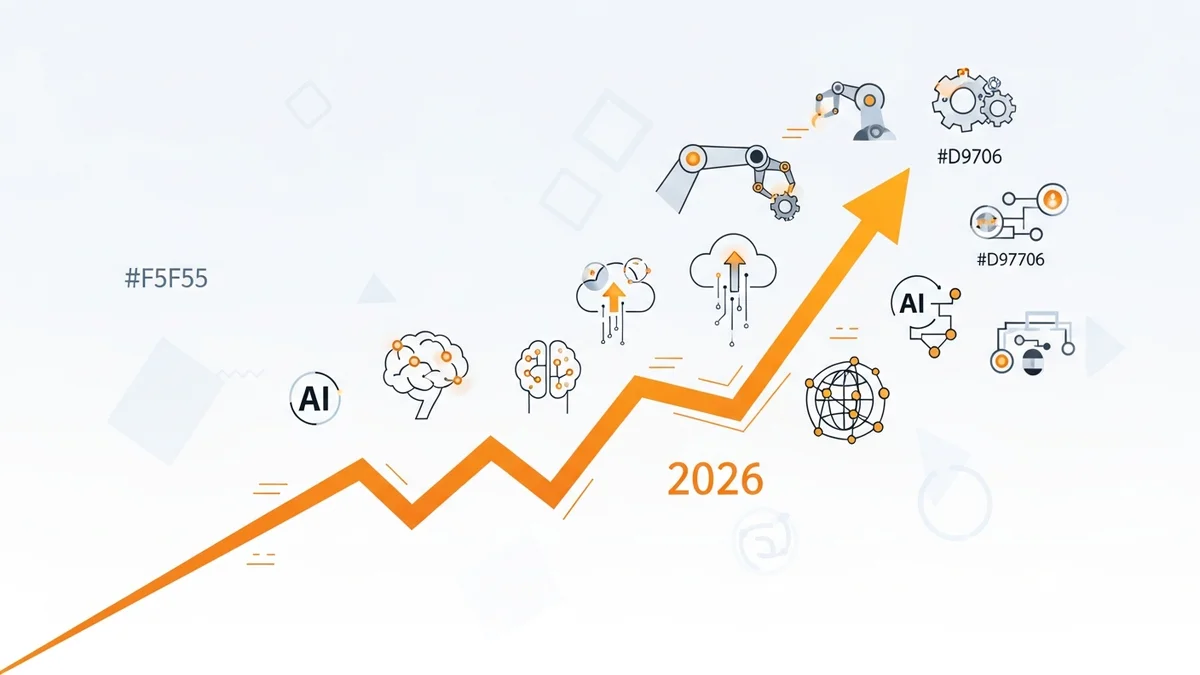
The future of no-code automation is not a distant concept — it is happening now, reshaping how businesses build, deploy, and scale digital workflows. By 2026, industry analysts at Gartner project that more than 80% of new software applications will be built by non-technical users through low-code or no-code tools. That statistic alone should reframe how every business leader thinks about their automation strategy.
But the story is more complicated than simple optimism. There is a genuine tension in the no-code space right now. Some experts argue that traditional drag-and-drop no-code is being rapidly displaced by AI-native development. Others believe the democratization of automation is only accelerating. The truth, as usual, sits somewhere in the middle — and understanding that tension is essential before you choose a platform, build a workflow, or train your team.
This guide cuts through the noise. We look at where no-code automation is genuinely headed, what forces are reshaping the market in 2026, and which platforms are best positioned to help your business stay competitive.
The Rise of the Citizen Developer: Everyone Is a Builder Now
For the past decade, automation was a bottleneck. A marketing manager with a workflow idea would submit a ticket to IT, wait weeks, and receive something that only partially solved the problem. That model is collapsing.
By 2026, research indicates that 80% of the people driving automation inside businesses will not be in IT departments at all. They will be in finance, operations, HR, and marketing — people who understand the actual problem better than any developer could. The citizen developer is not a hobbyist; they are a strategic asset.
What Is a Citizen Developer?
A citizen developer is any business user who builds functional automations, workflows, or applications using no-code or low-code tools — without writing traditional code. The concept is not new, but what has changed is the sophistication of what they can now build. A marketing coordinator can connect their CRM to campaign analytics, trigger follow-up sequences, and log results automatically. An HR professional can build an entire onboarding workflow — from document collection to system provisioning — without submitting a single IT request.
Platforms like Zapier and Make have made this possible at scale, with thousands of pre-built integrations and intuitive visual builders that require no programming background. The result is not just efficiency — it is a direct pipeline between the person who understands the problem and the tool that solves it.
The Cultural Shift Behind the Technical One
ServiceNow's Group VP of Product, Jithin Bhasker, put it plainly: the line between "developer" and "user" is blurring. Agentic AI systems are becoming part of daily work, suggesting improvements and validating workflows in the background. The implication for businesses is clear — digital literacy and automation fluency are no longer optional skills. They are core competencies, no different from knowing how to use a spreadsheet.
Organizations that invest in building this culture now will compound significant advantages over those still routing every workflow request through overloaded IT teams.
AI as Co-Creator: No-Code Gets Dramatically Smarter
If citizen developers were the first wave of the no-code revolution, AI-augmented automation is the second — and it is far more powerful.
By 2026, artificial intelligence is woven into the fabric of every leading automation platform. This is not window dressing. AI in the context of no-code automation means three distinct capabilities: workflow generation from natural language prompts, intelligent optimization of existing processes, and predictive identification of bottlenecks before they cause problems.
Natural Language Workflow Creation
The most dramatic shift is the move from visual drag-and-drop to voice and natural language interfaces. Builders can now describe what they want — "Create a workflow that monitors my inbox for invoice emails, extracts the total amount, and logs it to a Google Sheet" — and the platform generates a working automation. Platforms like Webflow and Wix already do this for layouts; the same capability is arriving in workflow automation.
n8n and Activepieces are among the open-source-leaning platforms pushing this direction hard, offering extensibility that allows AI models to be integrated directly into workflow logic — not just bolted on as a feature.
AI That Improves Your Workflows Over Time
Modern workflow automation software reduces delivery timelines by up to 70%, according to research from Anly.ai. Add intelligent recommendations on top of that baseline speed, and the compounding effect is significant. AI acting as a "quiet co-pilot" — validating workflows, preparing next releases, catching edge cases — transforms automation from a one-time build into a continuously improving system.
Newsletter
Get the latest SaaS reviews in your inbox
By subscribing, you agree to receive email updates. Unsubscribe any time. Privacy policy.
This is why platforms with strong AI integration layers, like Microsoft Power Automate, are gaining traction in enterprise environments. Power Automate's deep integration with Copilot and the broader Microsoft 365 ecosystem gives it an AI foundation that pure-play no-code platforms struggle to match.
The Great Debate: Is No-Code Dying or Evolving?
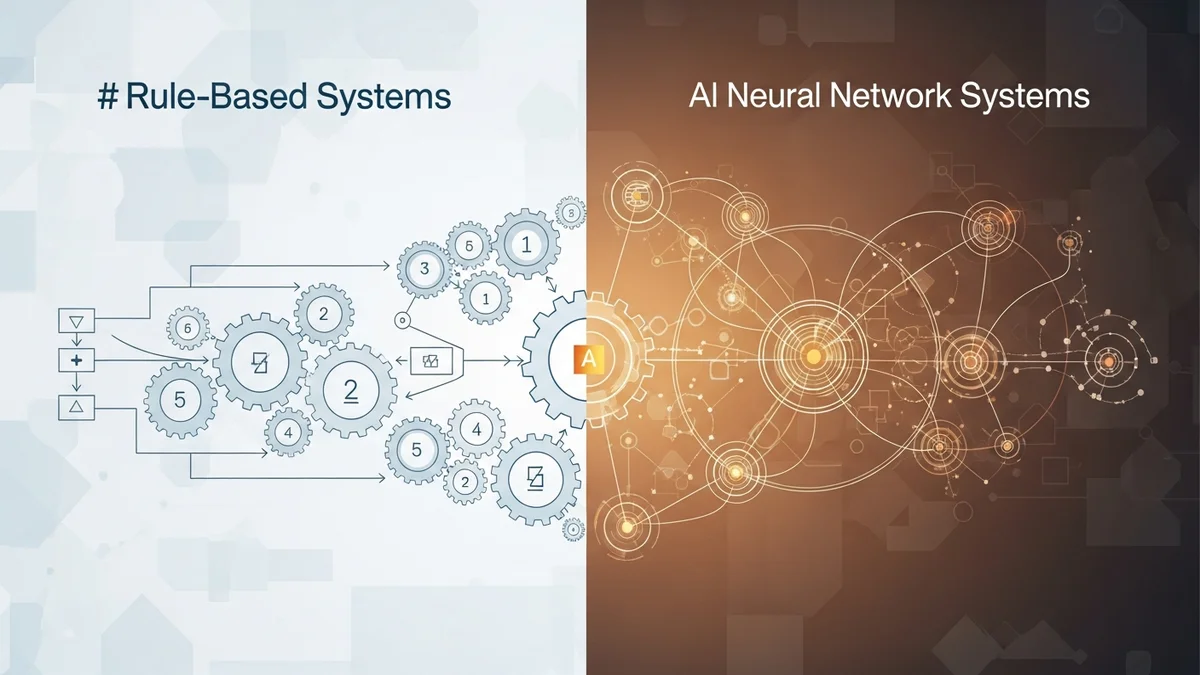
Not everyone is bullish on the no-code future. Raymond Kok, CEO of Mendix, offered a blunt assessment: "No code's on its last legs — it's being snuffed out by vibe coding." His argument is that AI-driven development tools are so capable now that the traditional no-code model — visual development, drag-and-drop, pre-built blocks — is becoming redundant.
The logic runs like this: if an AI can generate functioning code from a plain-English description, then the value of a drag-and-drop interface disappears. The human role becomes strategic modeling and problem scoping, not interface assembly. Low-level code output becomes irrelevant; all value shifts to the planning and intent layer.
Why We Disagree With the "No-Code Is Dead" Take
This argument is intellectually interesting but practically overstated. The premise assumes that every business user is ready to trust AI-generated code that they cannot read, audit, or debug. Most are not — nor should they be. The governance, compliance, and security requirements in enterprise environments mean that someone needs to understand what a workflow actually does. Visual interfaces provide that legibility.
What is more accurate is that no-code is evolving rather than dying. The drag-and-drop paradigm is being supplemented — not replaced — by AI generation. The best platforms of 2026 offer both: you can describe your intent in natural language and get a starting point, then refine it visually. That hybrid approach gives you AI speed without AI opacity.
Platforms like Workato exemplify this evolution — they serve enterprises that need sophisticated automation with the governance controls IT demands, while still offering low-code interfaces that business users can navigate.
Affordable Automation: The Playing Field Is Finally Level
One of the most consequential shifts in 2026 is economic. For too long, enterprise-grade automation was locked behind six-figure implementation budgets, complex vendor contracts, and months of professional services engagements. That era is ending.
As NE2NE founder Steven Pappadakes put it, automation is becoming universal — with execution as the differentiator. The no-code and low-code platforms available today give small and mid-sized businesses access to the same workflow automation sophistication that Fortune 500 companies paid millions to build five years ago.
Platform Cost Comparison: What You Are Actually Paying For
| Platform | Entry Price (Monthly) | Free Tier | Primary Use Case | Best For |
|---|---|---|---|---|
| Zapier | $19.99/month (Starter) | 100 tasks/month | App-to-app integration | SMBs, non-technical teams |
| Make | $9/month (Core) | 1,000 ops/month | Visual workflow builder | Power users, complex logic |
| n8n | $20/month (Cloud Starter) | Self-hosted (free) | Technical automation | Developers, data teams |
| Microsoft Power Automate | $15/user/month | Limited (M365 included) | Enterprise workflow | Microsoft-centric orgs |
| Activepieces | $0 (open source) | Self-hosted (free) | Open-source automation | Developers, privacy-focused |
The pricing gap between enterprise and SMB automation has collapsed. A business with five employees can deploy the same quality of integration infrastructure as a company with 5,000. The competitive advantage now belongs to whoever executes faster and adapts smarter — not whoever can afford the biggest software contract.
Hybrid Low-Code and No-Code: The Model That Actually Works in Practice
The purist no-code vision — where every business user builds everything without any developer involvement — is a useful North Star but an unrealistic operational model for most organizations. What actually works is a hybrid approach where citizen developers handle the 80% of automation that is straightforward, and developers govern, extend, and integrate the 20% that is complex.
Gartner predicts that this collaboration between technical and non-technical teams will dominate enterprise software development. The key design requirement for platforms in 2026 is therefore not just ease-of-use, but modularity — the ability for a business analyst to build a workflow that a developer can later extend with custom code, APIs, or security controls.
What to Look For in a Hybrid Platform
The best platforms offer shared environments where both technical and non-technical builders can work without stepping on each other. Look for version control, role-based permissions, and clear extension points where developers can inject custom logic. Pipedream is particularly strong here — it sits at the intersection of code and no-code, letting developers write Node.js or Python steps while exposing the same workflows to business users through visual interfaces.
The hybrid model also addresses one of the most persistent concerns about citizen developer proliferation: governance. When developers set the standards and guardrails, business users can build freely within them. That balance is what sustainable automation at scale actually looks like.
How to Prepare Your Business for the No-Code Future
Understanding trends is only useful if it changes what you do on Monday morning. Here is a practical framework for positioning your business to benefit from the no-code evolution in 2026 and beyond.
1. Identify Your Highest-Impact Automation Targets First
Before evaluating platforms, audit your existing manual processes. The 70% reduction in delivery timelines that modern automation platforms enable is not evenly distributed — it concentrates in high-frequency, rule-based processes. Data entry, report generation, lead routing, invoice processing, and onboarding sequences are where no-code automation generates the fastest, most measurable ROI.
2. Invest in Automation Literacy Across Departments
With 80% of automation users sitting outside IT by 2026, the limiting factor for most businesses will not be the technology — it will be organizational readiness. Train your finance, HR, and operations teams to think in workflows. Pair them with a developer or IT lead who sets the governance framework, and give them permission to build.
3. Choose a Platform That Grows With You
Avoid the trap of selecting a platform purely on current ease-of-use. The no-code landscape is consolidating rapidly, and the platforms that will matter in three years are those with strong AI roadmaps, open ecosystems, and enterprise-grade security. Evaluate not just what a platform does today, but where it is investing for tomorrow.
4. Plan for AI Integration, Not Just Workflow Integration
The next generation of no-code automation is not about connecting app A to app B — it is about embedding AI decision-making into those connections. When evaluating platforms, ask how AI fits into their workflow logic, not just whether they have an "AI feature." Ambient AI that validates workflows, suggests optimizations, and flags anomalies will be a standard expectation by the end of 2026.
The future of no-code automation rewards organizations that treat it as a strategic capability, not a cost-cutting tactic. The tools are more powerful and more accessible than ever before. The businesses that move decisively — building automation cultures, empowering citizen developers, and choosing platforms built for the AI era — will find that the competitive gap between them and slower-moving competitors widens faster than at any previous point in the digital era.