
The State of Business Automation in 2026: Beyond Simple Task Execution
Business automation in 2026 is not the same animal it was three years ago. What started as a way to eliminate repetitive data entry has evolved into something far more consequential: intelligent systems that make decisions, orchestrate multi-step processes, and increasingly operate without human intervention at every step. The numbers back this up. The global hyperautomation market stood at USD 15.62 billion in 2025 and is projected to reach USD 38.43 billion by 2030. The RPA market alone is on track to hit USD 23.94 billion by 2029 — more than triple its 2024 size.
That kind of growth does not happen because companies are automating email replies. It happens because automation has moved from the IT department's pet project to a core execution layer that CFOs, COOs, and boards are treating as a strategic competitive asset. This guide breaks down the trends that are actually reshaping how businesses run in 2026 — and what they mean for your automation stack.
Hyperautomation Has Left the Pilot Phase
For most of 2022–2024, hyperautomation was a buzzword deployed liberally in vendor decks but rarely visible in production environments. That changed in 2025–2026. With over 35% of Australian businesses having adopted automation technologies as of 2024, and enterprise-grade platforms maturing considerably, the pilot-to-production gap is closing fast.
Hyperautomation, in its truest form, integrates AI, machine learning, RPA, and analytics into end-to-end systems — not just isolated workflow triggers. The critical shift is from automating a task to automating an entire process chain. A traditional RPA bot might transfer data between two systems. A hyperautomation deployment orchestrates the decision, the transfer, the exception handling, the audit log, and the downstream notification — with machine learning handling the routing decisions in real time.
Why Traditional RPA Alone Is No Longer Enough
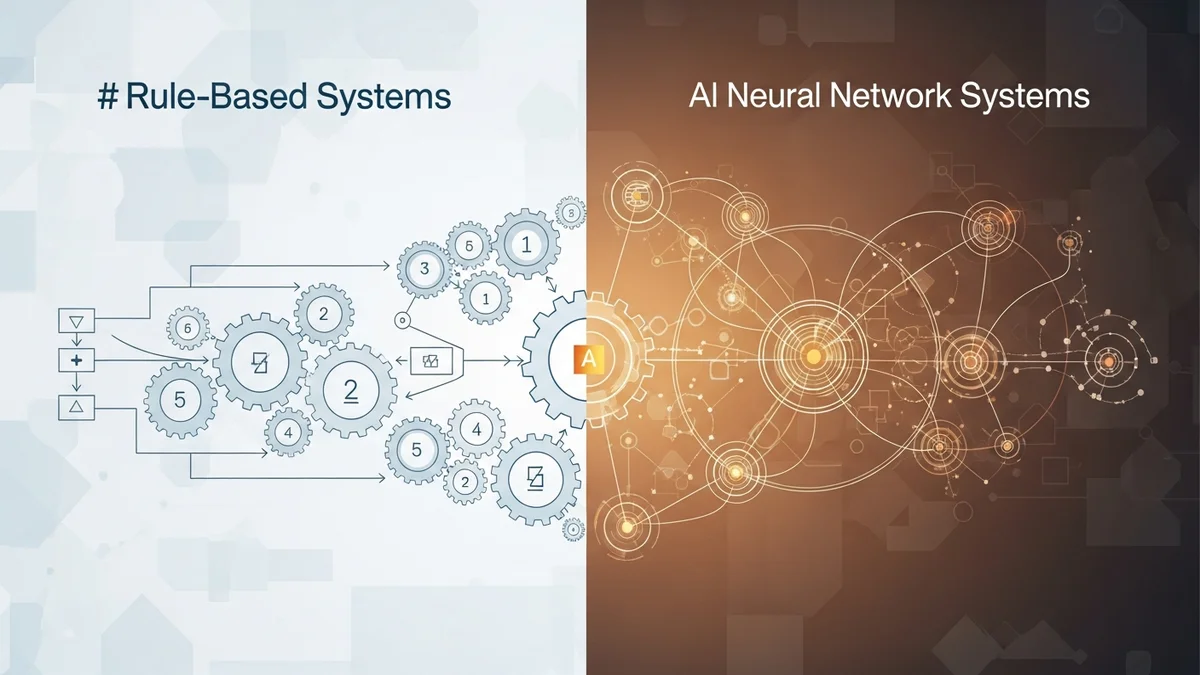
The fragility problem with pure RPA is well-documented at this point: bots break when UI layers change, workflows fail when upstream data is malformed, and exceptions pile up in queues that nobody reviews. The enterprises seeing the strongest returns in 2026 are those that have layered AI classification and process orchestration on top of their RPA investments rather than treating RPA as a finished automation layer.
Tools like Workato and Microsoft Power Automate have moved aggressively in this direction — combining connector-based workflow automation with AI-driven logic and exception handling. The result is automation that degrades gracefully instead of failing catastrophically when something unexpected happens.
Agentic AI Is Rewriting the Automation Playbook
The most disruptive trend in 2026 is not incremental — it is architectural. Agentic AI systems, where AI models operate autonomously within defined boundaries to complete multi-step tasks, are moving from research demos into production workflows at a pace that is genuinely surprising even to people close to the space.
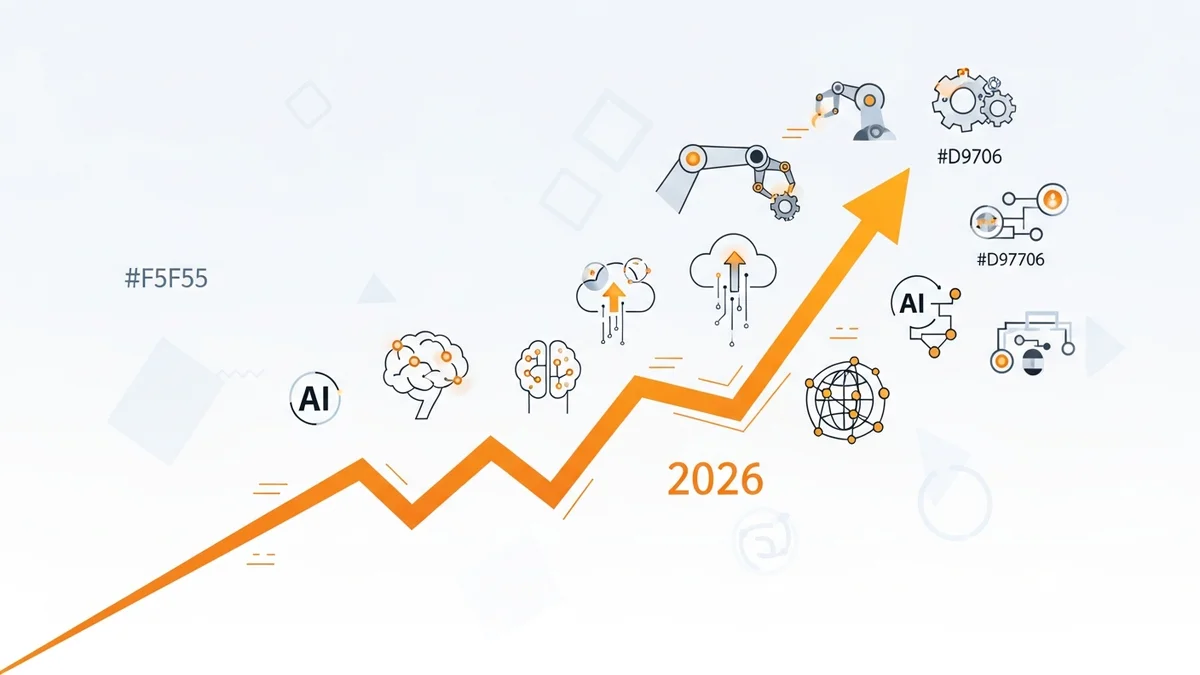
Task-specific AI agents are now present in 40% of enterprise applications in 2026, up from less than 5% in 2025. That is not a gradual trend — that is a near-vertical adoption curve. And it is already creating a new category of automation risk: 90% of organizations have users directly accessing generative AI apps, and the data flowing to those apps jumped 30-fold in a short period — from 250 MB per month to 7.7 GB per month per organization.
The Governance Problem Nobody Wants to Talk About
Here is the uncomfortable reality: most businesses are adopting agentic AI faster than they are building the governance structures to control it. When an AI agent has authority to send emails, update CRM records, approve transactions, or escalate support tickets, the audit trail and permissioning model matters enormously. A credible automation strategy in 2026 has to include identity management for automated agents, escalation design for edge cases, and measurable performance management — not just workflow diagrams.
This is where the difference between consumer-grade automation tools and enterprise-grade platforms becomes visible. n8n's self-hosted option and Workato's governance layer both reflect this reality — organizations want control over what their automation agents can actually do, not just what they were designed to do.
Process Orchestration Replaces Task-Level Thinking
Newsletter
Get the latest SaaS reviews in your inbox
By subscribing, you agree to receive email updates. Unsubscribe any time. Privacy policy.
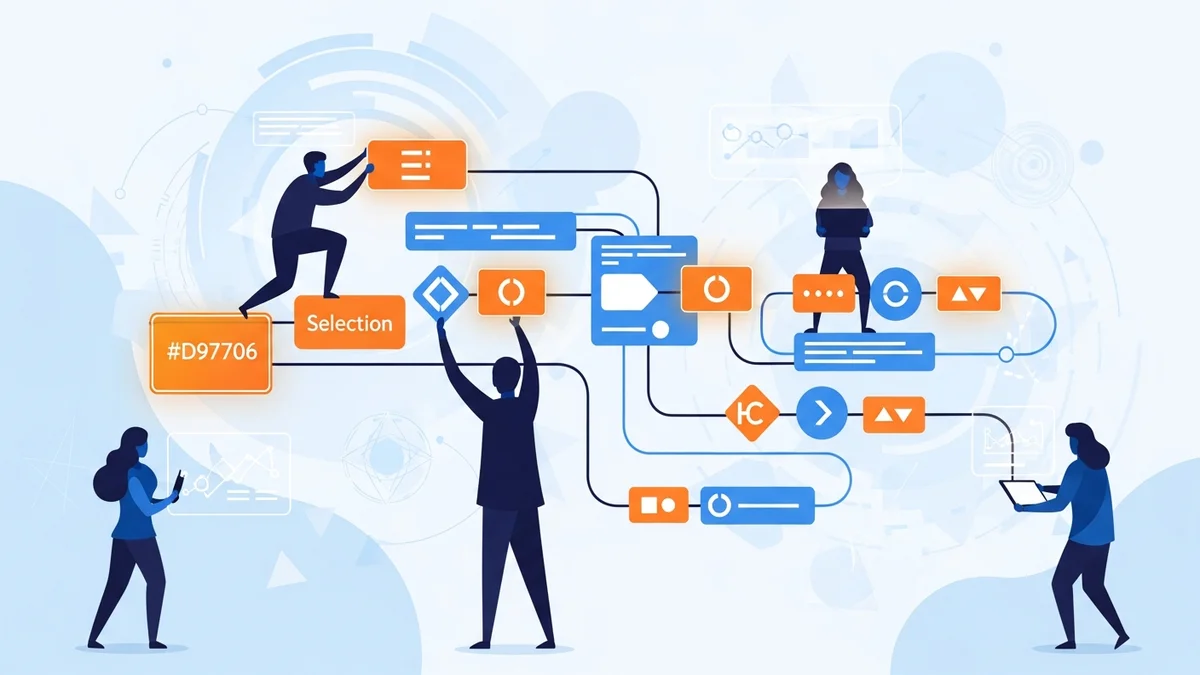
If there is a single conceptual shift that explains 2026 automation strategy, it is the move from task-level execution to process orchestration. Traditional automation asked: "What repetitive task can we eliminate?" Modern automation asks: "What end-to-end process chain can we optimize, and how do we coordinate AI decisions, human approvals, and system actions across it?"
This is not just semantic. The technical implications are significant. Process orchestration requires:
- Stateful workflow management that can pause, resume, and branch based on real-time conditions
- Exception and escalation design that routes edge cases to humans intelligently rather than failing silently
- Cross-system data consistency so that actions in one system are reflected accurately downstream
- Audit evidence that satisfies compliance requirements across the full process chain
Tools like Make (formerly Integromat) have built their product around scenario-based orchestration rather than linear task automation, which is why they continue to hold ground against newer entrants. For teams that need even more technical flexibility, Pipedream offers code-native orchestration that can handle complex branching logic without the constraints of purely visual builders.
Intelligent Document Processing as a Force Multiplier
One of the highest-ROI areas of process orchestration in 2026 is intelligent document processing (IDP). The research is clear on this: IDP implementations are saving businesses 60–70% on document-heavy workflows. When you consider how many enterprise processes — procurement, accounts payable, contract management, HR onboarding — are still bottlenecked by manual document handling, that number represents a substantial operational opportunity.
IDP in 2026 uses a combination of OCR, NLP, and machine learning to extract, validate, and route information from unstructured documents without requiring manual review for every record. The key word is "validate" — modern IDP systems do not just extract text, they cross-reference extracted data against business rules and flag anomalies before they propagate downstream.
Low-Code and No-Code Platforms Are Democratizing Automation — With Caveats
The low-code/no-code wave has been building for years, but 2026 represents a maturity inflection point. The platforms are genuinely capable now, and the user base has expanded well beyond the "citizen developer" archetype that vendors used to pitch. Finance teams, operations managers, and customer success leads are building real automation without writing a line of code.
| Platform | Primary Audience | Automation Approach | Governance Controls |
|---|---|---|---|
| Zapier | SMB / Non-technical teams | Trigger-action Zaps | Basic team permissions |
| Make | Mid-market / Power users | Visual scenario builder with branching | Team roles, scenario versioning |
| Workato | Enterprise | Recipe-based with AI agents | Enterprise-grade audit, SSO, RBAC |
| n8n | Technical teams / self-hosted | Node-based with code nodes | Self-hosted data control, custom auth |
| Activepieces | SMB / Open-source adopters | Flow-based with growing connector library | Self-host option for data control |
| Microsoft Power Automate | Microsoft 365 orgs | Desktop + cloud flows with Copilot AI | Deep Azure AD / compliance integration |
The caveat worth stating plainly: low-code democratization has a shadow side. When anyone in the organization can build automation, governance becomes harder, not easier. Automation sprawl — dozens of unmanaged, undocumented workflows built by individuals who have since left the company — is a real operational risk that organizations are only beginning to confront systematically in 2026.
Self-Hosted AI Platforms Are Gaining Ground
A meaningful countertrend to cloud-only automation is the rise of self-hosted AI platforms. Data sovereignty concerns, regulatory requirements, and a general wariness about sending sensitive business data to third-party AI services are driving enterprises to explore on-premise and private-cloud AI deployments. The 30-fold increase in data flowing to generative AI apps is precisely the statistic that triggers CISO alarm bells — and rightfully so.
Self-hosted options like n8n allow organizations to run their automation infrastructure entirely within their own environment, eliminating the data residency concerns that block adoption in regulated industries like financial services, healthcare, and legal services. This is not a niche preference — it is a strategic requirement for a growing segment of the market.
Real-Time Data Integration as Competitive Infrastructure
The final trend worth examining seriously is real-time data integration. Automation that operates on stale data is automation that makes bad decisions. As AI agents take on more autonomous authority in business processes, the quality and freshness of the data they consume becomes a first-order concern.
In 2026, real-time data integration has moved from a nice-to-have for analytics teams to foundational infrastructure for automation at scale. The businesses that can act on accurate, current information — whether that is inventory levels, customer behavior signals, or financial thresholds — have a structural advantage over those operating on batch-updated snapshots.
Process Mining: Knowing What to Automate Before You Build It
Process mining deserves specific mention because it addresses one of the most common and expensive automation mistakes: building automations for the wrong things. Process mining analyzes actual event log data from existing systems to map how processes really run — not how they were designed to run. The gap between those two pictures is often where the highest-value automation opportunities live, and also where naive automation implementations fail most visibly.
Organizations that adopt process mining as a continuous improvement practice rather than a one-time discovery exercise are building a feedback loop between their automation performance and their automation roadmap — a capability that compounds over time.
What This Means for Your Automation Strategy in 2026
The through-line across all of these trends is that automation strategy has become inseparable from business risk management. When 88% of organizations have adopted AI in at least one business function, and AI agents are embedded in 40% of enterprise applications, the question is no longer "should we automate?" The questions are: what do we automate with confidence, what governance structures do we build around autonomous systems, and how do we measure whether it is actually working?
The businesses that will extract the most value from automation in 2026 are not necessarily those deploying the most technology. They are the ones that have clearly mapped their process chains, defined exception handling before deploying automation into production, established audit trails that satisfy compliance requirements, and built feedback loops that let measured performance drive automation decisions.
Pick your tools based on those requirements — not on feature lists. Whether that means a low-code platform like Zapier for quick SMB wins, a developer-friendly orchestration layer like Pipedream for technical teams, or an enterprise platform with full governance controls — the architecture matters far more than the interface.
The automation competitive advantage in 2026 belongs to whoever builds the most reliable, governable, and continuously improving execution layer. That is the real trend worth tracking.