
Why Most Workflow Automation Projects Miss the Mark
Workflow automation has a seduction problem. The tools are beautiful, the demos are impressive, and the ROI promises are compelling. So teams rush to pick a platform, automate whatever's most painful, and wonder six months later why the time savings never materialized.
The problem isn't the technology — it's the approach. By 2025, 70% of new enterprise applications are being built with no-code or low-code tools, according to analyst projections. But adoption speed doesn't equal adoption quality. The organizations getting real returns from automation follow a different playbook: process clarity first, tooling second.
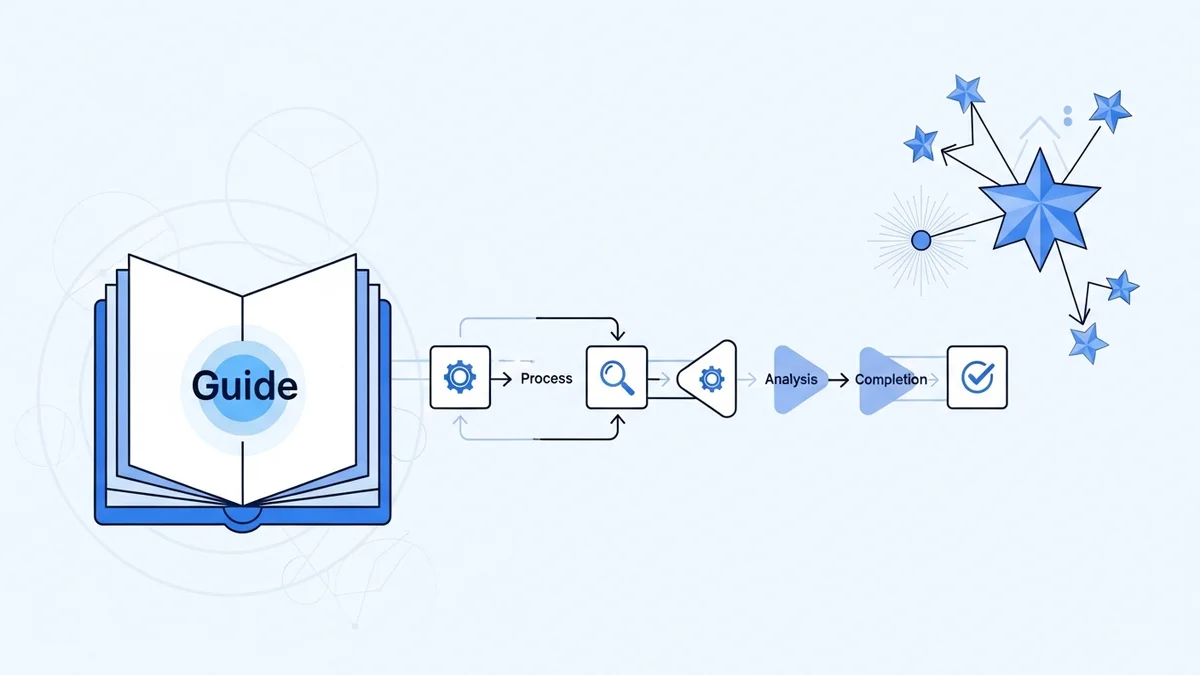
This guide covers the best practices that separate automation that compounds over time from automation that creates new maintenance burdens. We'll also be direct about which tools are best suited for which scenarios, because "it depends" is the most useless answer in any software review.
Best Practice 1: Map the Process Before You Touch a Tool
The single biggest mistake teams make is automating a broken process. Automation doesn't fix bad workflows — it accelerates them. If your lead handoff involves four manual steps and two people who interpret the rules differently, automating it will just produce inconsistent outputs faster.
Before opening Zapier or any other automation platform, document the current state of the process you want to automate:
- What triggers the workflow? A form submission, an email, a status change, a scheduled time?
- What are all the steps? Include the informal ones that happen inside someone's head.
- Where do exceptions happen? The 20% of cases that don't fit the standard path are where automation breaks.
- What does success look like? Define the output before defining the steps.
This isn't bureaucracy — it's the foundation of automation that actually works. Natural language workflow creation tools (increasingly common in 2026 platforms) still require you to know what you want to describe. "When a customer complaint comes in, check if they're a premium customer, and route to senior support within 15 minutes" is only a useful prompt if you've already decided that's your policy.
Best Practice 2: Start With High-Volume, Low-Complexity Tasks
Not every process is worth automating first. The highest ROI targets share two characteristics: they happen frequently, and the decision logic is simple enough to codify without edge cases consuming all your time.
Lead routing, invoice generation, status update notifications, data sync between systems — these are the automation sweet spots. They're repetitive enough that time savings accumulate fast, and they're predictable enough that your automation won't break on its third run.
Complex, high-stakes decisions — credit approvals, contract negotiations, hiring decisions — are poor candidates for full automation early in your journey. Autonomous workflow agents that handle nuanced decision-making are maturing fast. UiPath research shows organizations piloting them report a 65% reduction in routine approvals requiring human intervention. But that maturity requires governance frameworks and audit trails most teams aren't ready to build on day one.
Start where wins are easy and visible. Credibility from early automation wins funds the organizational trust you need to tackle harder problems later.
Best Practice 3: Build Error Handling From Day One
Every automation will fail eventually. An API goes down. A field that's always been populated arrives empty. A third-party service changes its response format without notice. What happens when your automation hits these cases determines whether it's a productivity asset or a liability.
The worst automation failures are silent ones — where the workflow stops without anyone knowing. The second worst are noisy failures that don't give you enough context to diagnose the problem. Good error handling means:
- Alerts that reach the right person when something breaks
- Fallback paths for common failure modes — retry logic, human escalation queues
- Logging that captures enough context to debug the failure
- Clear ownership: someone specific is responsible for each automation
Platforms differ significantly here. n8n and Make offer granular error handling with custom retry logic and fallback branches — this matters when you're building workflows that touch critical business data. Simpler tools trade that flexibility for faster setup, which is a reasonable tradeoff for low-stakes automations but risky for anything customer-facing or revenue-critical.
Newsletter
Get the latest SaaS reviews in your inbox
By subscribing, you agree to receive email updates. Unsubscribe any time. Privacy policy.
Best Practice 4: Establish Governance Before You Scale
The citizen developer wave is real. Gartner projects that by 2028, 33% of enterprise software applications will include agentic capabilities that complete tasks autonomously. Meanwhile, roughly 41% of employees are already building or customizing technology for their own work.
That's powerful — and potentially chaotic. When anyone can build automations, organizations end up with hundreds of workflows with no documentation, unclear ownership, overlapping logic, and nobody who knows what will break when a core system gets updated.
Governance doesn't mean slowing down. It means investing in infrastructure that makes scaling sustainable.
A Workflow Registry
A simple spreadsheet or dedicated tool that tracks every active automation: what it does, who owns it, what systems it touches, and when it was last reviewed. This unsexy infrastructure saves enormous time when things break or when you're evaluating a system migration.
Naming Conventions and Folder Structure
Teams that skip this are always sorry later. Consistent naming — for example, [DEPARTMENT]-[TRIGGER]-[ACTION]-[DATE] — makes automation libraries searchable and auditable when your library grows to dozens or hundreds of workflows.
Scheduled Review Cycles
Automations decay. The process they encoded may have changed. The tools they integrate may have updated their APIs. Quarterly reviews of active automations catch drift before it causes downstream problems.
Enterprise-grade platforms like Workato and Microsoft Power Automate have built-in governance features — centralized dashboards, role-based access control, and audit logs — that make this manageable at scale. For mid-market and enterprise teams, these aren't nice-to-haves.
Which Tool Is Best for Your Use Case
The "best" workflow automation tool depends almost entirely on your technical environment, team skill level, and workflow complexity. Here's a direct assessment of the major platforms:
| Tool | Best For | Skill Level | Free Tier | Standout Feature |
|---|---|---|---|---|
| Zapier | SMBs connecting SaaS apps quickly | Non-technical | 100 tasks/month | 6,000+ app integrations |
| Make | Complex multi-step workflows with branching logic | Intermediate | 1,000 ops/month | Visual scenario builder with advanced routing |
| n8n | Developer teams wanting self-hosted control | Technical | Self-hosted, free forever | Open source with code execution nodes |
| Microsoft Power Automate | Microsoft 365 ecosystems | Low–intermediate | Included with M365 plans | Deep Office 365, Teams, and SharePoint integration |
| Workato | Enterprise integration with complex business logic | Intermediate–advanced | No free tier | Enterprise governance and compliance tooling |
| Activepieces | Teams wanting an open-source Zapier alternative | Non-technical | Cloud + self-hosted free tier | TypeScript-based pieces for custom extensions |
| Pipedream | Developers building event-driven automations | Technical | 10,000 credits/month | Code-first with Node.js and Python support |
The non-obvious insight here: most teams don't need the most powerful tool — they need the tool their team will actually maintain. A Zapier workflow that runs reliably for two years beats an n8n implementation that nobody touches after the person who built it leaves. Evaluate tools against your team's actual capabilities, not aspirational ones.
Best Practice 5: Measure Automation ROI Honestly
Most automation ROI calculations are optimistic to the point of fiction. They count hours saved at the task level without accounting for setup time, maintenance overhead, error investigation, or the cognitive load of managing an automation portfolio.
A more honest framework measures these four things:
- Actual hours reclaimed per week — surveyed from the people whose work changed, not estimated from task duration spreadsheets
- Error rate before and after — automation should reduce human error, and you should be able to demonstrate it with data
- Cycle time for the process — total elapsed time from trigger to completion, not just the human-touch portions
- Maintenance cost — how many hours per month does your team spend keeping active automations running?
No-code automation platforms claim development time reductions of up to 90% compared to traditional custom development. That's credible for simple integrations. For complex, multi-system workflows, the honest number is closer to 50–70% — still significant, but setting realistic expectations prevents disillusionment and keeps stakeholders supportive when the next initiative needs funding.
The 2026 Shift: AI-Augmented Automation Changes the Rules
Workflow automation is undergoing its most significant evolution since the rise of iPaaS platforms. Three trends are reshaping what's possible right now, and the best practices above provide the foundation to take advantage of them.
Natural Language Workflow Creation
Business users can now describe workflows in plain language and have platforms generate the logic automatically. This removes IT as a bottleneck for every process change — but it shifts IT's role toward governance and oversight rather than eliminating IT's involvement entirely. Someone still needs to review what gets built, verify it meets security requirements, and own it when it breaks at 2am.
Autonomous Decision Agents
Rather than following rigid if/then rules, autonomous agents evaluate context before acting. An expense report isn't just routed based on dollar amount — the agent considers who submitted it, their approval history, and whether the expense category is typical for their role. Organizations piloting these systems report that 65% reduction in routine approvals requiring human intervention cited above. That's not a marginal efficiency gain — it fundamentally changes the economics of approval-heavy workflows.
Predictive Workflow Optimization
Traditional workflow analytics tell you what happened. Predictive capabilities identify bottlenecks before they cause SLA breaches, surface anomalies in real time, and suggest process improvements based on pattern analysis across thousands of workflow runs. This moves automation from reactive maintenance to proactive optimization — a qualitatively different value proposition.
The teams winning with these capabilities share a common foundation: they already have the basics right. Clean process documentation, solid error handling, and governance infrastructure aren't legacy concerns that AI will eventually make irrelevant. They're the prerequisites for AI automation to work at all. Autonomous agents making decisions in poorly documented, ungoverned environments create liability, not efficiency.
The Bottom Line
The technology for workflow automation has never been more accessible or more capable. The gap between organizations that benefit from it and those that don't isn't about tool selection — it's about discipline in the fundamentals: clear process documentation, appropriate tool choice for your team's actual skill level, error handling from day one, governance before scale, and honest measurement of what automation is actually delivering.
Start with processes you understand completely. Build governance infrastructure before you think you need it. And as AI-augmented automation matures — with autonomous agents, natural language builders, and predictive optimization becoming table stakes — invest in the foundations that make those capabilities trustworthy rather than just impressive in demos.
The organizations that extracted the most value from the last generation of automation are the ones positioned to benefit most from what's coming. Discipline compounds.