
Why Marketing Automation Buyers Need a New Framework in 2026
The marketing automation market is no longer a nice-to-have category — it's a $13.71 billion industry projected to keep growing at a 12.9% CAGR through 2030. More telling: 76% of enterprises already use some form of marketing automation, which means if you're shopping for a platform today, you're not making a pioneering decision. You're making a competitive one.
What's changed is the nature of the decision itself. Two years ago, buyers evaluated marketing automation on deliverability rates, workflow builders, and CRM integrations. Today, those are table stakes. The real differentiators in 2026 are AI orchestration depth, unified data architecture, and whether the platform can close the loop between strategy and performance automatically — without a human manually adjusting sequences every week.
This guide cuts through the noise. If you're buying a marketing automation platform for the first time, switching vendors, or advising clients on their stack, here's what actually matters and how to evaluate it.
The 2026 Marketing Automation Stack: What Buyers Are Actually Buying
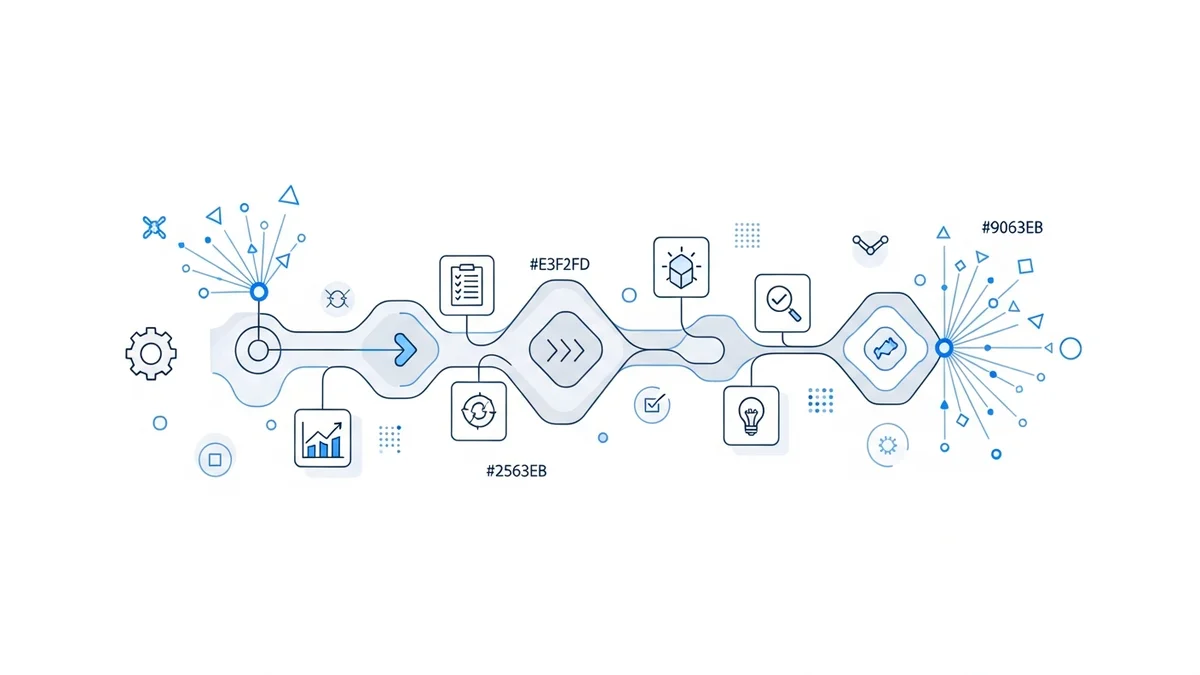
Most buyers enter the market looking for "a marketing automation tool," but what they're actually building is a layered system. Understanding those layers prevents the most common buying mistake: choosing a tool that excels at one layer while ignoring critical gaps in another.
| Layer | Purpose | What to Look For |
|---|---|---|
| Data Management | Central CRM and marketing automation hub | Unified contact records, behavioral tracking, segmentation depth |
| AI Orchestration | Cross-app automation and intelligent data flow | Reinforcement learning, next-best-action engines, agentic workflows |
| Revenue Generation | Lead capture and multi-channel conversion | SMS, email, chat — coordinated, not siloed |
| System Connectors | Integration between CRM, ad platforms, and niche tools | Native integrations + middleware support (Zapier, Make, etc.) |
| Reporting & Transparency | Client-facing and internal performance visibility | Real-time dashboards, AI decision explainability |
The most common buyer mistake is evaluating only the email marketing layer and ignoring the connectors layer entirely. Cross-app middleware tools like Zapier and Make remain essential in 2026 precisely because no single platform covers every channel, CRM, and ad network natively. Budget for integration infrastructure from day one.
The Three AI Capabilities That Separate Serious Platforms from the Rest
Every vendor will tell you they have AI. Here's how to evaluate whether it's real differentiation or a marketing label slapped on a rules-based engine.
1. Reinforcement Learning for Closed-Loop Optimization
The highest-capability platforms in 2026 use reinforcement learning — not just A/B testing or static send-time optimization. The difference is fundamental: RL systems close the loop between strategy, content, performance, and next action automatically. The system writes, tests, adapts, and improves content continuously using performance data as fuel, without requiring a human to interpret results and manually adjust campaigns.
When evaluating a platform, ask specifically: does the AI optimize subject lines, message content, and creative treatments simultaneously? Or does it only offer one-variable testing at a time? True multi-variable continuous optimization is the sign of a platform that has actually built RL into its core rather than bolted on a GPT-based copywriting feature.
2. Next Best Action Engines That Are Actually Agentic
The term "next best action" has been diluted. In 2025, it meant a prediction model recommending what a human should do next. In 2026, it means an agentic co-pilot that can identify the most valuable action for a contact, generate the content to execute it, schedule and deploy the message, and explain why it made that decision — asking for human approval only where brand guidelines or compliance requires it.
This distinction matters enormously for buyers managing large contact lists. A platform that requires human review of every campaign decision doesn't scale. A platform with genuine agentic next-best-action creates what amounts to a perpetual 1:1 adaptive nurture for every contact — contextual, self-adjusting, and grounded in individual history and intent.
3. Deep Context Profiles, Not Just Segmentation
Leading platforms in 2026 don't just use your existing contact data — they expand it. Agentic AI systems identify gaps in contact records and automatically gather or infer additional context: industry insights, role-specific challenges, local market factors, behavioral indicators, and likely motivations. The result is per-contact context profiles that are dynamic and detailed, not static persona assignments.
This is the shift from personalization (sending the right message to the right segment) to true relevance (sending the right message to the right individual, in the right context, at the right moment). If a platform's personalization strategy is still primarily segment-based in 2026, it's a generation behind.
Newsletter
Get the latest SaaS reviews in your inbox
By subscribing, you agree to receive email updates. Unsubscribe any time. Privacy policy.
Integration Architecture: The Decision Most Buyers Get Wrong
The most expensive mistake in marketing automation purchasing isn't choosing the wrong primary platform — it's underestimating integration costs and complexity. Every enterprise tech stack has legacy systems, niche tools, and department-specific software that won't be replaced. Your marketing automation platform needs to work with all of it.
Native Integrations vs. Middleware Dependency
Before signing any contract, map your existing stack against the platform's native integration library. Native integrations are faster, more reliable, and don't require additional middleware subscription costs. But no platform covers everything natively, which means you'll almost certainly need middleware connectors.
Make and Zapier remain the dominant middleware choices for most marketing teams in 2026. For teams with more complex, multi-step automation requirements or higher data volumes, n8n offers a self-hostable alternative with greater customization and no per-operation pricing at scale. Microsoft Power Automate is the natural choice for organizations already deep in the Microsoft 365 ecosystem.
Budget reality: middleware isn't free. A typical agency-scale implementation using a primary MAP plus Zapier or Make for integrations adds $50–$300/month in connector costs depending on operation volume. Factor this into total cost of ownership calculations from the start.
CRM Integration Depth
Shallow CRM integrations — passing basic contact data back and forth — are not sufficient for 2026 automation. You need bidirectional sync that includes deal stage data, activity history, and custom fields. Platforms that only offer one-way sync from CRM to MAP create data silos that undermine the unified data architecture your AI features depend on.
For teams using a CRM-first workflow, evaluate whether tools like Freshsales or Close offer native marketing automation capabilities that eliminate the CRM-MAP sync problem entirely by keeping both functions in one system.
Privacy, Consent, and the Data Architecture You'll Need
Privacy regulations are no longer a compliance checkbox — they're actively shaping what's technically possible in marketing automation. Stricter consent requirements in the EU, expanding state-level privacy laws in the US, and the ongoing deprecation of third-party cookies mean that the data architecture underlying your marketing automation platform directly determines what you can and can't personalize.
This has a concrete implication for buyers: platforms that rely heavily on third-party data enrichment or lookalike modeling based on purchased data are structurally more exposed to regulatory risk than platforms built around first-party behavioral data and explicit consent signals.
When evaluating platforms, ask directly: how does the platform handle consent state management? Can consent preferences propagate automatically across channels and suppress contacts from campaigns they haven't opted into? Platforms that require manual suppression list management create both compliance risk and operational overhead at scale.
The best platforms in 2026 treat consent as a data signal that actively shapes personalization — not just a gate that determines whether a contact is reachable. Consent-driven personalization means contacts who have opted into specific topics receive content precisely matched to those preferences, which drives higher engagement and lower unsubscribe rates simultaneously.
How to Structure Your Evaluation: A Practical Buyers Framework
Given the complexity of the category, a structured evaluation process matters more than any individual feature comparison. Here's the framework that separates buyers who select the right platform from those who switch vendors 18 months later.
Step 1: Define Your Automation Maturity Level
Marketing automation platforms are not interchangeable across maturity levels. An enterprise platform with advanced RL-based optimization will overwhelm a team that hasn't yet automated basic welcome sequences. A lightweight email automation tool will frustrate a team ready to implement omnichannel behavioral triggers.
Honest self-assessment: if your team currently manages campaigns manually or with basic scheduled emails, start with a platform that prioritizes usability and time-to-value over AI depth. You'll get more ROI from clean segmentation and reliable deliverability than from agentic features you don't have the data or operational maturity to use effectively.
Step 2: Audit Your Data Infrastructure First
AI-powered personalization is only as good as the data it runs on. Before evaluating platform AI capabilities, audit what contact data you actually have, how clean it is, and where it lives. A platform with world-class AI running on fragmented, inconsistent contact data will produce worse results than a simpler platform running on clean, unified data.
Unified data has become the backbone of marketing accuracy in 2026. If your contact data is spread across a CRM, an email platform, a support tool, and an e-commerce system with no central source of truth, address that problem before — or in parallel with — platform selection. The middleware tools that connect these systems (Make, Zapier, and for more complex pipelines, n8n) are frequently the highest-leverage investment in your automation stack.
Step 3: Evaluate on Transparency, Not Just Capability
The best marketing automation platforms in 2026 don't just make decisions — they explain them. Intelligent dashboards that surface system decisions and reasoning, not just performance outcomes, are a meaningful differentiator. When an AI system adjusts campaign timing, changes message content, or suppresses a contact from a sequence, you should be able to see why.
This transparency matters for three reasons: it enables human oversight and brand compliance, it creates a feedback loop for marketers to improve their overall strategy, and it builds organizational trust in automation that makes teams more willing to delegate higher-stakes decisions to the system over time.
Step 4: Total Cost of Ownership, Not License Price
Marketing automation platforms are rarely used at their published entry price. Contact list size, email volume, number of users, and feature tier all drive costs upward as programs scale. Factor in middleware costs, implementation and onboarding time, and any required technical resources for integration maintenance.
The market is moving fast enough that locking into a long-term contract without a performance clause carries real risk. In 2026, capabilities like agentic next-best-action and reinforcement learning optimization are available from a broader set of vendors than 12 months ago. Maintain flexibility where possible, and evaluate on demonstrated results — not just feature checklists — before committing to multi-year agreements.
The Bottom Line for 2026 Buyers
Marketing automation buying in 2026 is fundamentally different from buying in 2022 or 2023. The category has matured, AI capabilities have diverged sharply between vendors, and the integration layer has become as important as the platform itself. Buyers who treat this as a straightforward email-plus-CRM purchase will end up with a platform that's obsolete within 24 months.
The buyers who get it right are those who invest time upfront in understanding their data infrastructure, mapping their full automation stack (not just the primary platform), and evaluating AI capabilities with genuine skepticism rather than taking vendor demos at face value. The market is there — 76% of enterprises are already using automation, and the tools have never been more capable. The question is whether your selection process is rigorous enough to match the sophistication of what's now available.
Start with your data. Build for integration. Evaluate AI on transparency, not just capability claims. And budget for the connectors — because the platform is only as powerful as the ecosystem it sits in.