monday.com Pricing Plans at a Glance (2026)
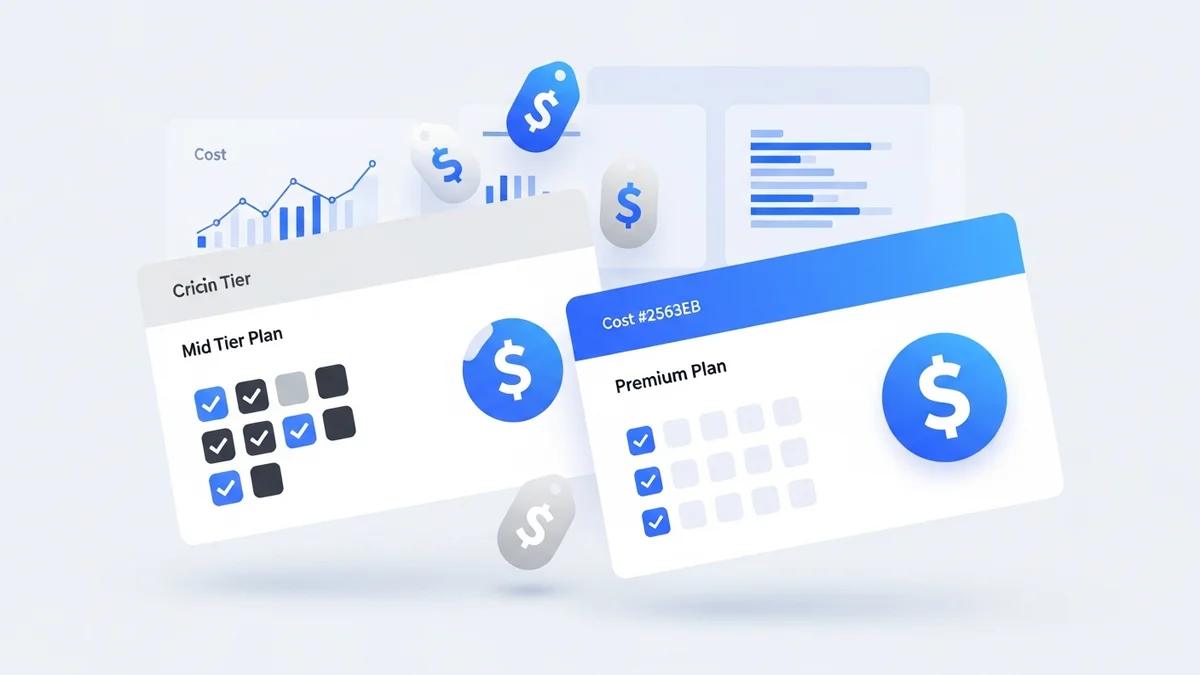
monday.com pricing starts at $9 per seat per month (billed annually), with a mandatory 3-seat minimum on all paid plans — meaning your lowest possible monthly invoice is $27/month. The platform offers five tiers, and the structure changed meaningfully in 2026 with AI features folded into every paid plan and a sharp 18% price hike applied to monday Service add-ons.
If you're evaluating monday.com alongside automation-heavy tools like Make or Zapier, understanding exactly what you're paying for at each tier — and what costs sneak up on you later — is critical before signing an annual contract.
| Plan | Annual Price (per seat/mo) | Monthly Price (per seat/mo) | Minimum Monthly Cost |
|---|---|---|---|
| Free | $0 | $0 | $0 (up to 2 seats) |
| Basic | $9 | ~$11 | $27/mo (3 seats) |
| Standard | $12 | ~$15 | $36/mo (3 seats) |
| Pro | $19 | ~$24 | $57/mo (3 seats) |
| Enterprise | Custom (typically $500+/mo) | Custom | Custom (negotiated annually) |
Annual billing saves approximately 18% compared to month-to-month pricing. All paid plans require a minimum of 3 seats.
Breaking Down Each monday.com Plan
Free Plan — $0 (Up to 2 Seats)
The Free plan is functional but tightly constrained. It's best treated as a trial environment, not a production workspace for real teams.
- Up to 2 team members only
- Unlimited boards and documents
- 200+ templates
- iOS and Android mobile apps
- 8 column types
- 1 week activity log
- No automations, no integrations, no timeline views
- 500 MB file storage limit
Basic Plan — $9/Seat/Month (Annual)
The Basic plan unlocks unlimited items, unlimited free viewers, and 5 GB of storage. It removes the 2-seat cap and opens file sharing with external guests.
- Unlimited items and free viewers
- 5 GB file storage
- Prioritized customer support
- Dashboard creation (single board only)
- iOS and Android apps
- 6 months activity log
- Still no automations, no integrations, no timeline or Gantt views
The glaring omission: zero automation or integration capabilities. For any team that wants to connect monday.com to their CRM, email, or tools like n8n, the Basic plan is a dead end.
Standard Plan — $12/Seat/Month (Annual) — Most Popular
Standard is where monday.com genuinely becomes useful as a work operating system. This tier unlocks timeline views, calendar views, guest access, and — critically — automations and integrations.
- Timeline, Gantt, calendar, and map views
- 250 automations per month
- 250 integration actions per month
- Guest access (up to 3 guests per paid member)
- 20 GB file storage
- 1 year activity log
- Dashboards combining up to 5 boards
- AI features included
The 250 automation limit per month is the tightest constraint here. A 10-person team running active workflows will burn through that budget quickly — at which point you're either upgrading to Pro or paying overage fees.
Pro Plan — $19/Seat/Month (Annual)
Pro removes most of the frustrating caps that Standard imposes and adds private boards, formula columns, and significantly more automation headroom.
- 25,000 automations per month
- 25,000 integration actions per month
- Private boards and documents
- Chart view and workload management
- Time tracking column
- Formula columns
- 100 GB file storage
- 2-year activity log
- Dashboards combining up to 20 boards
- Google authentication
The jump from 250 to 25,000 monthly automations is enormous. For teams building serious internal workflows — routing leads, updating statuses, triggering Slack messages, syncing with external databases — Pro is the tier that actually supports it without constant limits.
Enterprise Plan — Custom Pricing (Typically $500+/Month)
Enterprise is designed for large organizations with compliance requirements, advanced security controls, and dedicated support needs. Pricing is negotiated annually based on seat count and product additions.
Newsletter
Get the latest SaaS reviews in your inbox
By subscribing, you agree to receive email updates. Unsubscribe any time. Privacy policy.
- Unlimited automations and integrations
- Enterprise-grade security (SSO, SAML, advanced permissions)
- IP restrictions and audit log
- Advanced reporting and analytics
- Multi-level permissions
- 99.9% uptime SLA
- Dedicated Customer Success Manager
- Tailored onboarding
- Dashboards combining up to 50 boards
Hidden Costs: Credits, Add-Ons, and Overage Charges
monday.com's base pricing is only part of the story. Several costs regularly catch teams off guard after signing up.
Automation Overage Charges
On the Standard plan, once you exceed 250 automation actions per month, additional actions are billed as credits. Teams with active workflows on Standard plans frequently hit this ceiling within the first two weeks of the month. The practical fix is upgrading to Pro — but that's a 58% price increase per seat.
monday CRM Add-On
monday CRM is a separate product layered on top of your base subscription. It starts at approximately $10/seat/month (annual) and adds dedicated CRM boards, pipeline management, email tracking, and lead scoring. Teams considering a standalone CRM may find that Freshsales offers comparable functionality at lower all-in cost.
monday Dev Add-On
monday Dev targets software engineering teams and includes sprint management, bug tracking, and velocity reporting. Add-on pricing starts at approximately $9/seat/month (annual) on top of your base plan.
monday Service Add-On (18% Price Increase in February 2026)
In February 2026, monday.com announced an 18% price hike across all monday Service tiers. This customer support and ticketing product now carries meaningfully higher costs than it did in 2025. Teams evaluating it should budget for further increases given the company's pattern of annual price adjustments.
Additional Storage
Storage on paid plans ranges from 5 GB (Basic) to 1,000 GB (Enterprise). Teams managing large media assets or file-heavy projects on Standard or Pro may need to purchase additional storage blocks.
AI Credits
While AI features are included in paid plans, advanced AI usage — particularly bulk AI column operations and high-volume AI automations — draws from a credit pool. Teams running AI-assisted workflows at scale should monitor credit consumption and budget for potential add-on purchases.
monday.com vs. Competitors: Pricing Comparison
| Platform | Free Plan | Entry Paid (Annual) | Mid-Tier (Annual) | Seat Minimum | Automations Included |
|---|---|---|---|---|---|
| monday.com | Yes (2 seats) | $9/seat/mo (Basic) | $12/seat/mo (Standard) | 3 seats | 250/mo on Standard |
| Asana | Yes (up to 10 users) | $10.99/user/mo (Premium) | $24.99/user/mo (Business) | None | Unlimited (rules-based) |
| ClickUp | Yes (unlimited users) | $7/user/mo (Unlimited) | $12/user/mo (Business) | None | Unlimited on Business |
| Notion | Yes | $8/user/mo (Plus) | $15/user/mo (Business) | None | Limited (via integrations) |
monday.com's 3-seat minimum makes it more expensive for solo users and 2-person teams than Asana, ClickUp, or Notion. ClickUp is the most aggressive price competitor at $7/seat for its Unlimited tier — though monday.com's visual interface and no-code automation builder are generally considered more polished for non-technical users.
Who Each Plan Is Best For
Free Plan
Best for solo operators or two-person teams who want to evaluate monday.com before committing. Not viable for real team collaboration — the 2-seat ceiling and absence of automations make it a demo environment, not a production tool.
Basic Plan ($9/seat/month)
Best for small teams (3–5 people) who primarily need a visual task board with no integration requirements. Freelance studios tracking client deliverables, small operations teams logging manual processes, or organizations using monday.com as a simple status dashboard alongside a separate automation platform like Zapier.
Standard Plan ($12/seat/month)
Best for growing teams of 5–25 people who need timeline planning, guest access for clients or contractors, and light automation. Marketing agencies running campaign calendars, project managers coordinating cross-functional launches, and operations teams beginning to automate repetitive handoffs will find Standard sufficient — until they hit the 250-automation monthly ceiling.
Pro Plan ($19/seat/month)
Best for teams of 15–100 people running complex workflows with high automation volume. Sales operations teams syncing monday.com with their CRM, software companies managing sprint boards with private workspaces, and ops-heavy organizations building internal tools on top of monday.com's API. The jump to 25,000 automations per month effectively removes the ceiling for most mid-market teams.
Enterprise Plan (Typically $500+/Month)
Best for organizations with 100+ seats, compliance mandates (SOC 2, HIPAA, GDPR), and multi-department deployments requiring advanced user permission hierarchies. Financial services firms, healthcare organizations, and enterprise technology companies that need SSO, audit logs, and a dedicated Customer Success Manager.
Money-Saving Tips for monday.com
1. Always Bill Annually (Save ~18%)
Annual billing cuts approximately 18% from your monthly rate across all paid tiers. On a 20-seat Pro plan, that's a difference of roughly $912/year. There is no scenario where monthly billing makes financial sense unless you're running a short-term pilot.
2. Apply for Nonprofit Pricing
monday.com offers documented nonprofit discounts for qualifying organizations. Applications are processed through their official nonprofit program — budget for 30–75% off standard pricing depending on organization size.
3. Start on Standard, Not Pro
Most teams overestimate how quickly they'll hit the Standard plan's automation limits. Spend 60 days on Standard and audit actual automation usage before assuming you need Pro. Many teams discover they're well within the 250 actions/month threshold.
4. Negotiate Volume Discounts at 10+ Seats
monday.com's sales team has documented flexibility on per-seat pricing for teams purchasing 10 or more seats. Bringing a competitive quote from ClickUp or Asana to the negotiation typically yields 10–20% off list price.
5. Use Free Viewers Instead of Paid Seats
Stakeholders, executives, and clients who only need to read boards and dashboards can be added as free viewers at no cost on any paid plan. Audit your seat list quarterly — paying for full seats when viewer access suffices is one of the most common sources of unnecessary spend on monday.com.
6. Handle External Automations with a Dedicated Tool
Rather than upgrading from Standard to Pro solely to increase your automation quota, consider routing external integrations through a dedicated automation platform. Connecting monday.com to external services via Make counts as a single integration action from monday.com's side, while Make handles the multi-step logic — keeping you under the Standard plan's threshold at a fraction of the Pro upgrade cost.
Final Verdict: Is monday.com Worth the Price in 2026?
At $12/seat/month on Standard (annual), monday.com delivers genuine value for teams that need visual project management with light automation. The no-code builder, polished mobile apps, and template library are genuinely among the best in the category.
The caveats are real, though. The 3-seat minimum penalizes small teams. The automation caps on Standard are frustratingly low for active workflows. And the expanding add-on ecosystem — CRM, Dev, Service — means your total bill can balloon well beyond the base price if you adopt multiple monday products. The 18% price increase on monday Service in February 2026 confirmed that monday.com views premium features as a lever for margin expansion, not customer retention.
For teams with 5–50 seats running project management workflows without heavy CRM or support ticket requirements, the Standard or Pro plans represent fair value. For teams primarily looking for automation power at scale, evaluating the total cost against dedicated automation platforms is worth the due diligence before signing a multi-year contract.