
What Is Make and Why Automation Teams Are Switching to It in 2026
Make (formerly Integromat) has evolved from a niche visual automation builder into one of the most powerful workflow orchestration platforms for business teams. While tools like Zapier dominate the beginner market, Make has carved out a loyal following among operations managers, developers, and growth teams who need more control, more complex logic, and better value per operation.
The automation software market is projected to exceed $26 billion by 2027, and platforms that offer visual, no-code workflow builders with enterprise-grade logic are capturing the largest share of new sign-ups. Make sits at the intersection of power and accessibility — it handles multi-step, branching workflows that would break simpler tools, while still offering a drag-and-drop canvas that non-developers can navigate.
This guide breaks down Make's core features, how they compare to alternatives, where Make excels, where it falls short, and the most common mistakes teams make when adopting it.
Make's Core Features: A Strategic Overview
The Visual Scenario Builder
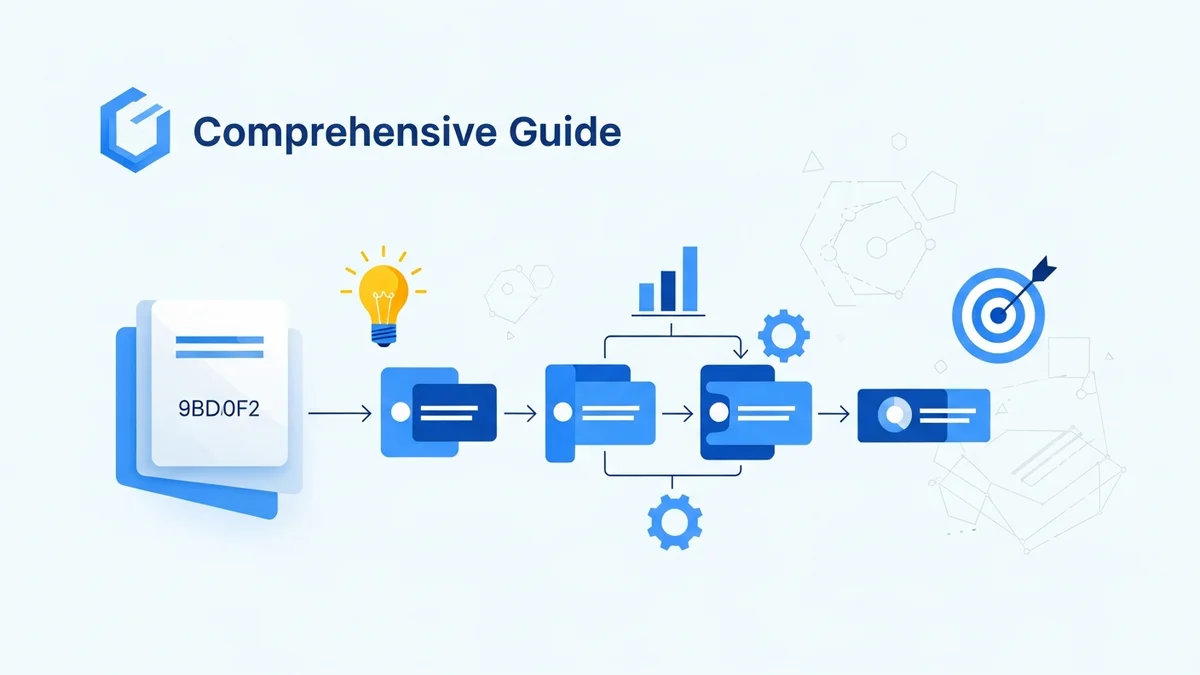
Make's defining feature is its canvas-based scenario builder. Unlike linear automation editors that display workflows as a list of steps, Make renders each scenario as an actual flowchart on a canvas. Every module (a connection to an app or a logic operator) appears as a node, and you draw connections between them visually.
This matters operationally. When you're building a workflow with 15 or 20 steps — for example, a lead enrichment pipeline that pulls data from a form, queries a CRM, validates emails, routes based on deal size, and posts a Slack alert — a linear editor becomes nearly impossible to audit. Make's canvas lets any team member open the scenario and understand the full data flow at a glance.
Modules, Routers, and Iterators
Make's three most powerful structural elements are:
- Routers: Split a workflow into multiple parallel branches based on conditions. A single incoming webhook can trigger four different action paths simultaneously — one for enterprise leads, one for SMB, one for unqualified contacts, and one error-handling path.
- Iterators: Process arrays item by item. If a webhook sends you a JSON array of 50 line items, an iterator loops through each one individually so you can apply per-item logic without writing code.
- Aggregators: The reverse of iterators — they collect multiple bundles into a single bundle, which is essential for building reports, batching API calls, or creating structured documents from dynamic data.
These three features alone separate Make from lighter-weight tools. Zapier added paths and looping later, but Make was built around branching logic from day one, and it shows in the UI.
Data Mapping and Transformation
Make includes a built-in formula engine for data transformation directly inside the mapping panel. You can apply string functions, date formatters, math operations, and conditional logic without leaving the module config. Common use cases include:
- Formatting phone numbers from international format to E.164 before pushing to a CRM
- Parsing full names into first/last for tools that require split fields
- Converting Unix timestamps to human-readable dates for spreadsheet exports
- Calculating deal scores by combining multiple numeric fields inline
Error Handling and Retry Logic
Production automation fails. APIs go down, rate limits get hit, and upstream data arrives malformed. Make's error handling lets you define behavior at the module level: retry the step, ignore the error and continue, rollback the full scenario, or break to a separate error-handling branch. This is critical for any workflow touching financial data, customer records, or time-sensitive notifications.
Make Pricing: What You Actually Get at Each Tier
| Plan | Monthly Price | Operations/Month | Scenarios | Key Limitations |
|---|---|---|---|---|
| Free | $0 | 1,000 | 2 active | No custom apps, no team features, minimum 15-min intervals |
| Core | $9/month | 10,000 | Unlimited active | No team collaboration, no priority support |
| Pro | $16/month | 10,000 | Unlimited active | Full-text execution log, custom variables, scenario inputs |
| Teams | $29/month | 10,000 | Unlimited active | Multi-user, role permissions, shared team scenarios |
| Enterprise | Typically $500+/month | Custom | Unlimited | SSO, audit logs, SLA, dedicated support |
Newsletter
Get the latest SaaS reviews in your inbox
By subscribing, you agree to receive email updates. Unsubscribe any time. Privacy policy.
Operations are Make's billing unit — each time a module processes a bundle of data, that's one operation. A scenario that runs 100 times per day with 8 modules per run consumes 800 operations daily, or roughly 24,000 per month. At that volume, the Core plan at $9/month won't cover you — you'd need to purchase additional operations or upgrade. Always map your expected run frequency and module count before committing to a plan.
How Make Compares to Key Alternatives
| Platform | Starting Price | Visual Canvas | Branching Logic | Best For |
|---|---|---|---|---|
| Make | $9/month | Yes (node canvas) | Full router/iterator support | Complex multi-branch workflows |
| Zapier | $19.99/month | Linear list | Paths (limited) | Simple 2-5 step automations |
| n8n | $20/month (cloud) | Yes (node canvas) | Full branching | Developer-first, self-hosted option |
| Activepieces | $0 (open source) | Yes | Branch support | Open-source, cost-sensitive teams |
| Workato | Typically $10,000+/year | Recipe-based | Enterprise-grade | Enterprise with IT governance needs |
| Microsoft Power Automate | $15/user/month | Flow diagram | Conditional branching | Microsoft 365 ecosystem |
For teams running fewer than 20 automations with straightforward trigger-action logic, Zapier's polish and app breadth often wins. But once you're building workflows with conditional routing, data transformation, and error handling at scale, Make's cost-per-operation and feature depth become a meaningful advantage.
Make's AI and Advanced Features in 2026
AI Modules and HTTP Integration
Make has added native AI modules for OpenAI, Anthropic, and Google Gemini, but its HTTP and webhook modules have always been its secret weapon for AI integration. Any AI API that accepts a REST call can be connected to Make in under 10 minutes — including custom-hosted models. This flexibility means you can build AI-augmented workflows like:
- Ingesting support tickets, sending them to an LLM for classification, and routing to the correct team queue automatically
- Pulling new deal records from your CRM, generating a personalized outreach email draft via Claude or GPT-4, and saving it back to the contact record for rep review
- Monitoring competitor pricing pages via scheduled webhooks, parsing changes with an AI module, and alerting the pricing team via Slack
Following best practices from the AI feature release world — defining clear success criteria, rolling out to internal users first, and maintaining kill switches — applies directly to Make scenarios. The platform's toggle-based scenario activation functions as an effective feature flag: you can deactivate a production scenario instantly without touching code or waiting for a deployment pipeline.
Scenario Inputs and Custom Variables
Available on the Pro plan and above, scenario inputs let you parameterize a scenario so it can be triggered with different configuration values each time. A single "send report" scenario can serve five different departments if each trigger passes different parameters for recipient, date range, and data source. This dramatically reduces the number of duplicate scenarios cluttering your workspace.
Webhooks and Instant Triggers
Make supports both polling (scheduled checks) and instant webhooks. For time-sensitive workflows — payment confirmations, lead capture from landing pages, real-time inventory alerts — instant webhooks are essential. Make's webhook handling is reliable at high volume and supports custom response payloads, meaning you can confirm receipt or return calculated data back to the triggering system synchronously.
Common Mistakes Teams Make When Adopting Make
1. Ignoring Operation Count During Planning
The most common billing surprise: a team builds a scenario that watches a Google Sheet for new rows, runs every minute, and has 12 modules. Even if no new rows appear, Make still counts the watch module trigger as an operation each polling cycle. At 1-minute intervals, that's 1,440 triggers per day from a single scenario — even when it does nothing. Set polling intervals to the minimum frequency your workflow actually needs, not the minimum allowed by the platform.
2. No Error Handling Branches
Most new Make users build the happy path and stop there. When an API call fails or a filter returns no matches, the scenario silently stops. Add error handler routes to every scenario that touches customer data or revenue-critical processes. At minimum, log failures to a Google Sheet or send a Slack alert with the error detail and execution ID so you can diagnose issues without digging through execution logs manually.
3. Over-Building in a Single Scenario
A 40-module scenario is a maintenance nightmare. If one step needs to change, the entire workflow is at risk. Break large workflows into smaller, modular scenarios that communicate via webhooks or a shared data store. For example, a lead processing pipeline works better as three linked scenarios — capture and validate, enrich and score, route and notify — than as one sprawling canvas.
4. Not Using Scenario Versioning
Make saves scenario history, but many teams don't use it. Before making significant changes to a production scenario, duplicate it and rename the original as a backup. Make's native versioning helps, but an explicit backup copy is faster to restore and easier to diff manually when debugging a regression after a workflow change.
5. Skipping User Testing for Automation Logic
Automation workflows have a UX problem that most teams overlook: the humans who review, approve, or act on automated outputs need to understand what they're looking at. Research from Nielsen Norman Group confirms that you only need to test with about five users to surface 85% of usability problems — the same logic applies to the dashboards, Slack messages, and email notifications your automations generate. Run your automation outputs past five actual end users before calling a workflow production-ready. If they can't immediately understand what action to take from the output, the automation isn't finished.
Who Should Use Make in 2026
Make is the right choice for operations teams that have outgrown simple trigger-action tools and need complex branching, data transformation, and reliable error handling without paying enterprise prices. It's particularly well-suited for:
- Growth and RevOps teams building multi-step lead enrichment and routing workflows between CRMs, enrichment APIs, and outreach tools
- E-commerce operators connecting Shopify, fulfillment APIs, accounting software, and customer notification systems
- Agencies managing automation workflows for multiple clients using team workspaces and shared scenario libraries
- Product and engineering teams automating internal processes — deployment notifications, data pipeline monitoring, and incident alerting — without needing a dedicated infrastructure engineer
If your team is primarily in the Microsoft ecosystem and uses Teams, SharePoint, and Dynamics daily, Microsoft Power Automate may deliver better native integration depth. If your needs are relatively simple and you prioritize the largest app catalog, Zapier remains the easiest onboarding path. But for teams that need genuine workflow complexity at a price point below enterprise platforms, Make has no close competitor in its tier.
Getting Started: A Practical First Week With Make
Start with one high-friction manual process your team runs at least three times per week. Map every step on paper first — inputs, outputs, decision points, and failure modes. Then build it in Make's free tier before committing to a paid plan. This gives you an accurate operation count, reveals where you need error handling, and confirms the workflow logic before you depend on it in production.
Once your first scenario runs clean for a week without manual intervention, document it internally: what it does, which modules it uses, who owns it, and what to check if it fails. This documentation habit, applied consistently, is what separates teams with 50 reliable automations from teams with 200 fragile ones.
Make's combination of visual design, operation-based pricing, and deep logic capabilities makes it one of the strongest value propositions in the automation space today — for the teams willing to invest the setup time to use it well.