
Why Teams Are Moving Away from n8n in 2026
n8n built a loyal following by offering open-source, self-hostable workflow automation with a visual node editor. But production deployments are exposing real limitations: self-hosting costs $200–$500/month for a small team once you factor in infrastructure, maintenance, and uptime monitoring. SSO and RBAC are locked behind enterprise plans. And 100-node workflows that fail silently at 2 AM are a genuine operational nightmare.
The integration library — roughly 400 connectors — is also significantly smaller than most alternatives. If your stack includes niche SaaS tools, you may be writing custom HTTP nodes more than you expected.
This guide covers eight platforms that solve specific n8n pain points. Each entry includes exact pricing, what it concretely does better, and where it falls short.
The 8 Best n8n Alternatives for 2026
1. Make (formerly Integromat) — Best Visual Builder for Non-Technical Teams
Make is the closest direct competitor to n8n in terms of visual, node-based workflow design — but it ships as a fully managed cloud service with 1,500+ integrations versus n8n's ~400. The scenario builder uses a canvas with explicit data transformation steps, making it easier to debug than n8n's node graph: each step shows its input and output inline without requiring a test run.
- Operations model: Make bills by operations (data transfers), not by workflow count, which is cheaper for high-frequency, low-complexity automations
- Error handling: Built-in scenario replay and partial execution — failed runs can resume from the failed module, not from scratch
- Team features: Multi-user workspaces, role assignments, and scenario locking on all paid plans (not enterprise-only)
- Pricing: Free (1,000 ops/month), Core $9/month (10,000 ops), Pro $16/month (100,000 ops), Teams $29/month (unlimited users), Enterprise $99/month
Where it falls short: No self-hosting option. Code execution is limited compared to n8n's Function node. Heavy ML or custom API workflows hit walls quickly.
2. Zapier — Best for Integration Breadth and Non-Technical Users
Zapier leads on connector count with 6,000+ integrations — roughly 15x n8n's library. If your automation depends on a long-tail SaaS tool, Zapier almost certainly has a native connector. The tradeoff is a linear Zap model (trigger → action chains) with less flexibility than n8n's branching graphs, though multi-step Zaps and conditional paths (Paths) close some of that gap.
- AI features: Zapier Central and AI actions allow natural-language task creation and AI-powered routing steps
- App approval speed: New integrations ship faster than any other platform due to the Partner Program
- Pricing: Free (5 Zaps, 100 tasks/month), Starter $19.99/month (750 tasks), Professional $49/month (2,000 tasks), Team $69/month, Company $99/month
Where it falls short: Task-based pricing gets expensive at scale — 50,000 tasks/month requires the Professional plan at $2-per-thousand rate. No self-hosting. Limited for complex data transformation.
3. Activepieces — Best Open-Source n8n Replacement
Activepieces is the open-source alternative most directly positioned to replace n8n. It ships under the MIT license (n8n uses a more restrictive fair-code license), meaning you can embed it in commercial products without licensing conversations. The self-hosted version is free with no feature gating — SSO, RBAC, and team collaboration are included by default, not locked behind enterprise plans.
- 638+ integrations with a public piece (connector) SDK that lets teams build and publish custom connectors
- AI agent builder: Native AI agent flows with tool-calling, memory, and multi-step reasoning — more structured than n8n's AI nodes
- Governance: Built-in audit logs, environment variables management, and flow versioning on self-hosted deployments
- Pricing: Self-hosted free (unlimited), Cloud Free (1,000 tasks/month), Starter $29/month (10,000 tasks), Pro $99/month (100,000 tasks), Enterprise typically $500+/month
Where it falls short: Younger ecosystem than n8n; some enterprise connectors (Salesforce, SAP) are still maturing. Community is smaller than n8n's.
4. Pipedream — Best for Developer-First API Automation
Pipedream targets developers who want the power of n8n's code nodes but without the operational overhead of self-hosting. Every workflow step can be a Node.js, Python, Go, or Bash code cell — with access to 1,500+ pre-built actions and a package manager that installs npm/PyPI dependencies on the fly.
- Event sources: Pipedream maintains persistent event sources (webhook listeners, polling crons, queue consumers) that survive workflow edits without redeployment
- Version control: Native Git-based workflow versioning with diff views — n8n has no comparable built-in feature
- Concurrency control: Per-workflow concurrency limits and queue management prevent thundering herd issues n8n struggles with
- Pricing: Free (100 invocations/day, 30-day log retention), Basic $19/month (10,000 invocations), Advanced $49/month (50,000 invocations), Business $149/month (500,000 invocations)
Where it falls short: No self-hosting option. The UI is less polished for non-developers. Workflow sharing between team members requires a paid plan.
5. Microsoft Power Automate — Best for Microsoft 365 Environments
Microsoft Power Automate is the obvious choice for organizations already paying for Microsoft 365. Native, deep integrations with Teams, SharePoint, Outlook, Dynamics 365, and Azure services operate at a data-access level that third-party tools cannot match — including things like SharePoint list triggers, Teams adaptive card actions, and Dataverse record manipulation.
- Desktop flows: RPA (robotic process automation) for legacy Windows applications — no other tool in this list offers comparable native desktop automation
- AI Builder: Pre-trained models for invoice processing, form recognition, and sentiment analysis, billed in credits alongside workflow runs
- Compliance: Inherits Microsoft's SOC 2, ISO 27001, HIPAA BAA, and FedRAMP certifications
- Pricing: Included with select M365 plans (limited connectors), Premium $15/user/month (all connectors), Process $150/user/month (unattended RPA), Power Automate per flow $500/month for 5 flows
Where it falls short: Connector quality outside the Microsoft ecosystem is uneven. The UI is significantly more complex than n8n for non-Microsoft workflows. Vendor lock-in is substantial.
Newsletter
Get the latest SaaS reviews in your inbox
By subscribing, you agree to receive email updates. Unsubscribe any time. Privacy policy.
6. Workato — Best for Enterprise Governance and IT-Led Automation
Workato competes at the enterprise end of the market where n8n cannot realistically play. It includes native support for governance policies, workspace separation, recipe (workflow) lifecycle management with approval workflows, and centralized connection management — all features n8n enterprise customers have to build themselves.
- 1,200+ enterprise connectors including SAP, Workday, Oracle, and ServiceNow with certified, maintained adapters
- Workbot: Conversational automation directly inside Slack and Teams — trigger workflows via chat commands without leaving the messaging app
- Embedded iPaaS: Workato can be white-labeled and embedded inside SaaS products for customer-facing automation
- Pricing: No public pricing; entry point is typically $1,500–$3,000/month for professional tier, enterprise contracts range from $5,000–$20,000+/month based on connector count and workspace usage
Where it falls short: Cost puts it out of reach for SMBs. No self-hosting. Steeper learning curve than n8n for simple automations.
7. Temporal — Best for Long-Running, Fault-Tolerant Workflows
Temporal is a durable execution framework originally built at Uber to handle workflows that run for minutes, hours, or even months without losing state. If n8n is failing your team on long-running processes — order fulfillment pipelines, multi-day approval chains, or workflows that must survive server restarts — Temporal solves that at the infrastructure level, not as a band-aid.
- Durable execution: Workflow state is automatically persisted; if a worker crashes mid-execution, the workflow resumes exactly where it left off
- Code-native: Workflows are written in Go, Java, Python, TypeScript, or .NET — no visual editor, full IDE and version control support
- Visibility: Built-in workflow history, timeline views, and stack traces for every execution
- Pricing: Open source self-hosted (free), Temporal Cloud starts at $25/month (10,000 workflow actions included), scales to enterprise contracts
Where it falls short: Requires engineering resources to implement — not a no-code tool. No pre-built connectors; integrations are hand-coded. High setup investment for simple use cases.
8. Vellum AI — Best for AI Agent Orchestration
Vellum AI is purpose-built for teams that primarily want to build and deploy AI agents, not general-purpose API automation. Unlike n8n's AI nodes (which are add-ons to a general automation graph), Vellum's entire architecture is designed around LLM prompt chains, evaluations, and agent orchestration — with built-in versioning, A/B testing for prompts, and quality metrics.
- Prompt management: Version-controlled prompt templates with deployment environments (staging/production) and rollback
- Evaluations: Built-in test suites to benchmark LLM output quality before deploying workflow changes
- Multi-model support: Route requests across OpenAI, Anthropic, Google, and open-source models from a single workflow
- Pricing: Free tier, paid plans starting at $25/month, enterprise plans typically $500+/month
Where it falls short: Not a general-purpose automation platform — poor fit for non-AI workflows. Integration library is smaller than n8n's for traditional SaaS connectors.
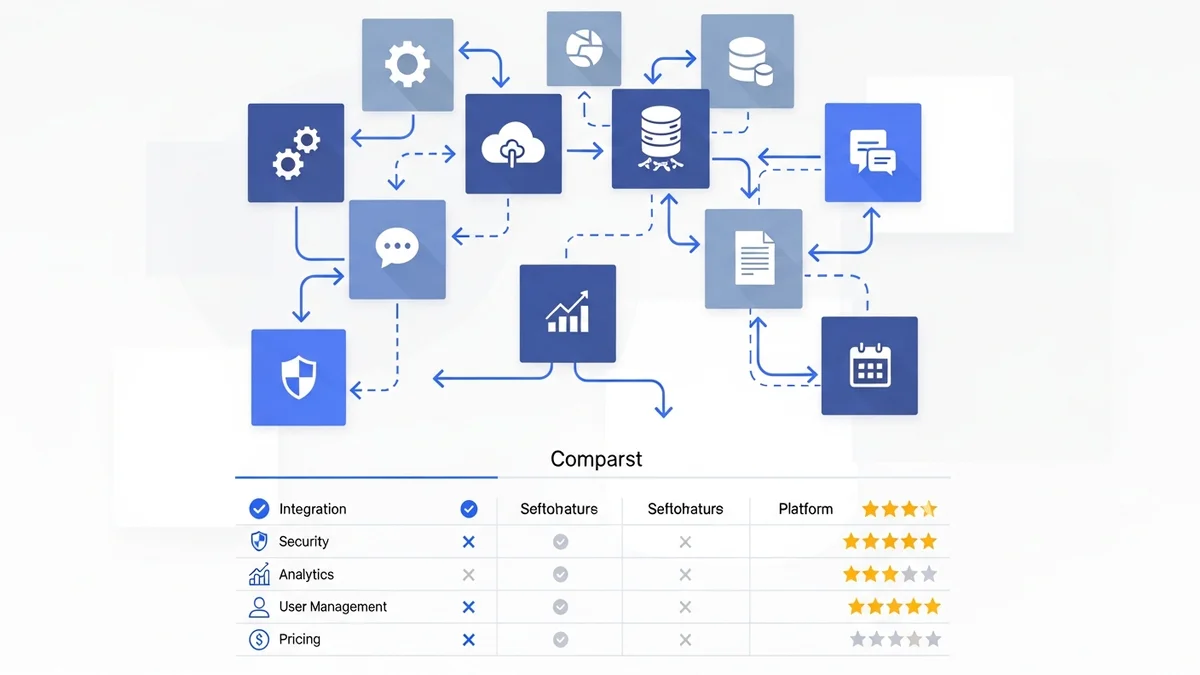
n8n Alternatives Comparison Table
| Tool | Starting Price | Integrations | Self-Hosted | AI Features | Best For |
|---|---|---|---|---|---|
| n8n | $20/month (Cloud) | ~400 | Yes (free) | Basic AI nodes | Technical users, self-hosted |
| Make | $9/month | 1,500+ | No | AI modules (OpenAI) | Visual automation, SMBs |
| Zapier | $19.99/month | 6,000+ | No | AI actions, Zapier Central | Integration breadth, non-technical |
| Activepieces | Free (self-hosted) | 638+ | Yes (MIT) | Native AI agent builder | n8n open-source replacement |
| Pipedream | $19/month | 1,500+ | No | AI step integration | Developer-first API automation |
| Power Automate | $15/user/month | 1,000+ | No | AI Builder (credits model) | Microsoft 365 environments |
| Workato | ~$1,500/month | 1,200+ | No | AI recipe actions | Enterprise governance |
| Temporal | $25/month (Cloud) | Custom only | Yes (open source) | None native | Long-running, fault-tolerant flows |
| Vellum AI | $25/month | Limited | No | Core product | LLM agent orchestration |
Migration Tips and Compatibility Notes
Moving from n8n to Make
n8n workflows do not import directly into Make — there is no native migration tool. The practical approach is to document each workflow's trigger, data transformations, and output steps, then rebuild in Make's scenario builder. Make's "bundles" (equivalent to n8n's items) behave differently: Make processes arrays as individual bundles by default, while n8n requires explicit split-in-batches nodes. Plan for this mismatch when rebuilding data-processing workflows.
Moving from n8n to Activepieces
Activepieces is the most architecturally similar alternative — both use a visual flow editor with discrete step nodes. Webhook triggers migrate directly (update the target URL in your source application). Custom HTTP Request nodes in n8n map to Activepieces' HTTP piece with near-identical configuration. The primary gap is n8n's Function node: Activepieces supports code steps in JavaScript, so logic can transfer, but the execution context differs slightly.
Moving from n8n to Pipedream
Pipedream's event source model means you define triggers separately from workflow steps — a different mental model than n8n's single-canvas approach. n8n Function node code (JavaScript) can be dropped almost directly into Pipedream code steps. Built-in n8n integrations (Slack, Gmail, Airtable) have equivalent pre-built Pipedream actions, usually with the same field names. Migrate credentials first using Pipedream's connected accounts system before rebuilding workflow steps.
Moving from n8n to Microsoft Power Automate
This migration involves the most conceptual rework. Power Automate's connector ecosystem uses a different data model — outputs are referenced by display name strings rather than node IDs. Complex n8n JavaScript expressions need to be rewritten using Power Automate's expression language (based on Azure Logic Apps functions). Start with the simplest workflows first to build familiarity before tackling complex branching flows.
Self-Hosting Considerations
If self-hosting is a hard requirement, your realistic options narrow to Activepieces (MIT license, Docker-based, full features unlocked) and Temporal (open source, but requires significant engineering setup). n8n's self-hosted version restricts several collaboration features to enterprise plans — Activepieces removes that gating entirely. Both run on standard Docker Compose setups; Activepieces requires PostgreSQL and Redis, Temporal requires a PostgreSQL or Cassandra backend.
Which n8n Alternative Should You Choose?
- You need the widest integration library with minimal setup: Choose Zapier. The 6,000+ connector catalog eliminates custom integration work for most business stacks.
- You want an open-source n8n replacement with fewer feature restrictions: Choose Activepieces. MIT license, self-hosted with SSO and RBAC included, and a growing AI agent layer make it the strongest like-for-like swap.
- Your team lives in Microsoft 365 and needs deep SharePoint/Teams integration: Choose Microsoft Power Automate. No third-party tool matches its native M365 access depth.
- You have developers who want code-first automation without self-hosting overhead: Choose Pipedream. Full Node.js/Python code steps, Git versioning, and a managed runtime eliminate the operational burden n8n self-hosting creates.
- You need visual automation with better team collaboration than n8n at reasonable cost: Choose Make. The $9/month entry point, 1,500+ integrations, and inline debugging make it the best-value visual alternative.
- You are building AI agents as the primary use case, not general automation: Choose Vellum AI. Its prompt versioning, evaluation framework, and multi-model routing are purpose-built for LLM workflows n8n treats as an afterthought.
- You run enterprise-scale automation requiring certified connectors, governance policies, and audit trails: Choose Workato. The premium price reflects enterprise-grade reliability and support that n8n cannot provide at that tier.
- Your workflows run for hours or days and must survive infrastructure failures: Choose Temporal. Its durable execution model solves a class of problems none of the visual automation tools in this list can handle reliably.
n8n remains a solid choice for technical teams comfortable with self-hosting who want maximum flexibility at low cloud cost. But if your team is hitting its collaboration limits, needs enterprise compliance features, or wants a more mature integration library, the alternatives above cover every realistic migration path — with concrete pricing and feature trade-offs you can act on today.